
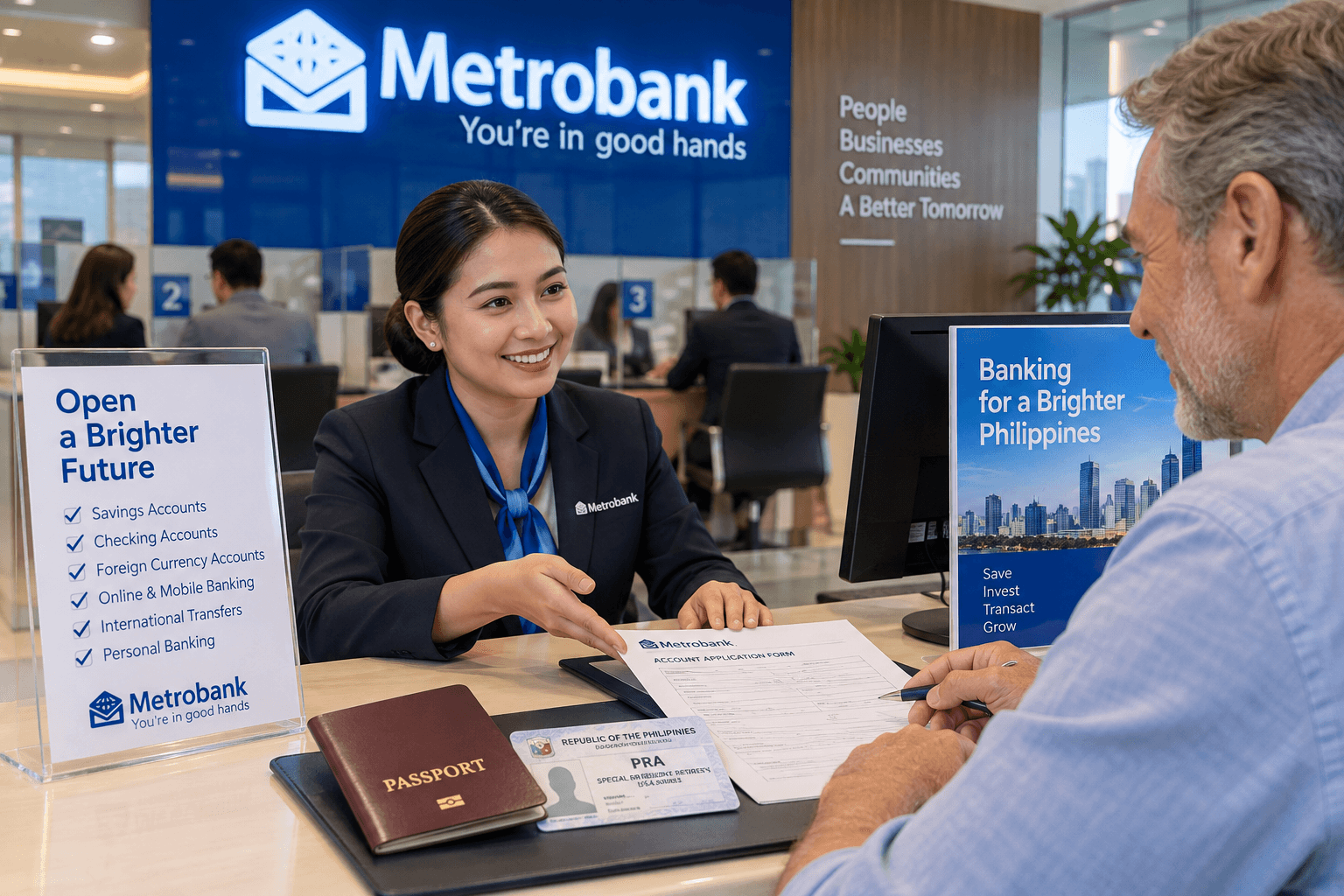
Opening a bank account in the Philippines as a foreigner is one of the first practical steps to take if you plan to live, retire, work, invest or do business in the country.
A local bank account makes everyday life considerably easier. It can be used to receive money, pay rent and utilities, transfer funds locally, withdraw pesos, use a debit card, pay through online banking and manage recurring expenses.
For a foreigner staying in the Philippines long-term, however, we recommend going one step further:
Do not rely only on a savings account. Open a checking account as well.
A checking account is not legally required simply because you are a foreign national. But in practical Philippine life, it can become extremely useful—and for many long-term foreign residents, effectively indispensable—because post-dated checks are still commonly used for rent, property transactions and other contractual payments.
This 2026 guide explains how foreigners can open a Philippine bank account, the documents banks may require, the difference between savings and checking accounts, which banks to consider and what to expect during the application process.
Can Foreigners Open a Bank Account in the Philippines?
Yes. Foreign nationals can open bank accounts in the Philippines, provided they satisfy the bank’s identity verification, residency and customer due-diligence requirements.
Banks are required under Philippine anti-money-laundering rules to establish the true identity of their clients and verify customers using official or otherwise reliable documents.
That means opening an account is not automatic.
The exact requirements can vary according to:
- the bank;
- your immigration status;
- how long you have been in the Philippines;
- the type of account;
- your source of funds;
- your Philippine address;
- whether you already have a relationship with the bank; and
- the bank’s internal compliance procedures.
A foreigner with an Alien Certificate of Registration, Philippine address and clear source of funds will generally have an easier time than a short-term visitor.
What Documents Does a Foreigner Need to Open a Philippine Bank Account?
Requirements vary according to the bank, visa status and type of account, but a foreign applicant may commonly be asked for:
- valid passport;
- ACR I-Card, if applicable to the applicant’s immigration status;
- SRRV and PRA ID Card for SRRV holders;
- valid Philippine visa or residency documentation;
- Philippine residential address;
- proof of address or billing;
- Philippine mobile number;
- email address;
- tax information where applicable;
- proof of employment, pension, business or other source of funds; and
- required initial deposit.
Foreigners should bring documents that clearly demonstrate both their identity and legal status in the Philippines.
For an SRRV retiree, the useful set would typically be:
Passport + SRRV + PRA ID Card + Philippine proof of address + source-of-funds documents.itional documents depending on their assessment of the customer.
Bring More Documents Than You Think You Need
This is one area where being overprepared helps.
Even if a bank’s website says that one identification document is sufficient, I recommend bringing:
- passport;
- ACR I-Card;
- visa documentation;
- lease contract;
- utility bill;
- employment certificate or business documents;
- proof of pension if retired;
- TIN documentation if you have one; and
- proof of source of funds.
Bank branches can apply compliance procedures differently depending on the customer’s circumstances.
Do You Need an ACR I-Card?
Not necessarily.
Many foreign residents in the Philippines use an Alien Certificate of Registration (ACR I-Card) as one of their main identification documents when dealing with banks.
However, SRRV holders are different.
A foreigner holding a valid Special Resident Retiree’s Visa (SRRV) is exempt from the Bureau of Immigration’s ACR Identity Card requirement. The Philippine Retirement Authority lists exemption from both annual reporting and the ACR I-Card among the benefits of the SRRV program.
Therefore, an SRRV holder should normally present the documents associated with his or her retirement status instead, such as:
- valid passport;
- valid SRRV;
- PRA ID Card;
- Philippine residential address;
- proof of address;
- source-of-funds documentation; and
- any additional documents required by the bank.
The PRA issues an official PRA ID Card to SRRV members, with the current card having a two-year validity period.
This makes the SRRV particularly convenient for retirees establishing their financial life in the Philippines.
ACR I-Card vs SRRV
In practical terms:
| Foreign resident | Typical immigration/ID document |
|---|---|
| Long-term foreign resident under other qualifying visas | ACR I-Card may be required or requested |
| SRRV holder | SRRV + PRA ID Card can be used instead of an ACR I-Card requirement associated with immigration status |
| Short-term tourist | May have more difficulty satisfying bank residency and identification requirements |
The important point is that bank requirements still vary.
An SRRV does not mean that every bank must automatically approve an account. Banks remain responsible for verifying:
- identity;
- residential address;
- source of funds;
- purpose of the account; and
- other customer due-diligence information.
But an SRRV holder has a much clearer long-term residency status than an ordinary tourist, which can make banking and other transactions considerably easier.
For foreigners considering retirement in the Philippines, read our SRRV Philippines 2026: Complete Guide for Foreign Retirees for the requirements, visa deposit, benefits and application process.
Can a Tourist Open a Bank Account in the Philippines?
It can be difficult.
Banks must comply with customer identification and anti-money-laundering requirements, and they may also apply their own risk-based onboarding policies.
A tourist who has:
- no Philippine residence;
- no ACR;
- no local employment;
- no local business;
- and no clear long-term connection to the Philippines
may find that some branches are unwilling to open a standard account.
This does not mean that Philippine law absolutely prohibits every tourist from having an account. Rather, the bank determines whether it can satisfactorily identify and onboard the customer under its compliance procedures.
If you intend to live in the Philippines longer term, opening the account after your immigration and residence documents are established is usually easier.
Savings vs Checking Account: Foreigners Should Have Both
This is one of the most important practical points in this guide.
A foreigner living in the Philippines should normally have:
- a savings account, and
- a checking account.
They serve different purposes.
Savings Account
A savings account is suitable for:
- receiving money;
- keeping peso funds;
- ATM withdrawals;
- debit card purchases;
- bank transfers;
- online banking;
- paying bills; and
- everyday expenses.
For someone newly arriving in the Philippines, this is usually the first account to open.
But for a long-term resident, a savings account alone is often not enough.
Checking Account
A checking account allows you to issue checks.
That may sound old-fashioned to foreigners coming from countries where checks are rarely used anymore.
In the Philippines, however, checks—especially post-dated checks or PDCs—continue to be used in many transactions.
This is particularly important when dealing with:
- condominium rentals;
- house rentals;
- lease contracts;
- property purchases;
- vehicle purchases;
- installment arrangements;
- business transactions; and
- other contractual payments.
For example, a landlord may ask a tenant to provide 12 post-dated checks covering one year of rent.
If you only have a savings account, you cannot issue those checks.
Why We Consider a Checking Account a Must for Long-Term Foreigners
A checking account is not a legal requirement for foreigners.
However, if you plan to live in the Philippines rather than simply visit, we consider it practically a must-have.
It gives you much more flexibility when dealing with landlords, property owners, businesses and contractual payments.
This becomes particularly important when renting a condominium.
Our Renting a Condo in Manila: Practical Guide for Foreigners in 2026 explains why post-dated checks are frequently part of Philippine lease arrangements.
If you are considering ownership instead, see Buying a Condo in the Philippines as a Foreigner: 2026 Guide.
Open the Savings Account First, Then the Checking Account
A practical strategy is:
Step 1: Open a savings account.
Step 2: Establish your relationship with the bank.
Step 3: Apply for a checking account at the same bank.
Banks may be more comfortable issuing a checking account after they understand your identity, source of funds and banking activity.
The requirements for checking accounts are also usually somewhat stricter than for ordinary savings accounts.
How Much Do Checking Accounts Require?
The amount depends on the bank and account type.
As of 2026, for example, BDO Peso Checking lists:
- minimum initial deposit: ₱5,000
- minimum monthly average daily balance: ₱5,000
- personal checkbook fee: ₱250
BDO also states that the account can be used for payments by check or debit card.
BPI’s published deposit rates show its Regular Checking account with:
- required initial deposit: ₱10,000
- required minimum monthly average daily balance: ₱10,000.
These requirements can change, so verify the current amount with the bank before applying.
Which Philippine Banks Should Foreigners Consider?
There is no single best bank for every foreign resident.
The most practical choice often depends on:
- branch location;
- ATM availability;
- online banking;
- checking-account availability;
- international transfers;
- customer service;
- account-maintaining balance; and
- whether people you regularly transact with use the same bank.
For foreigners living in Metro Manila, I would compare Metrobank, BDO and BPI.
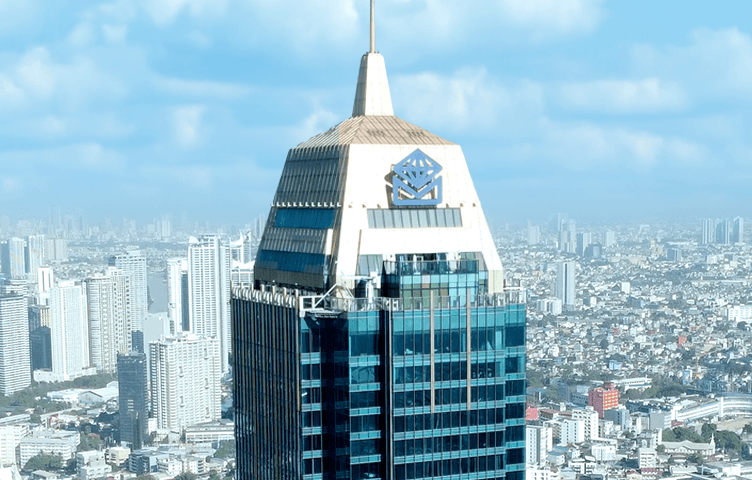
Metrobank
Metrobank is particularly worth considering for a foreign resident who wants both traditional branch banking and convenient digital transfers.
It is one of the Philippines’ largest banks and offers:
- peso savings accounts;
- checking accounts;
- foreign-currency accounts;
- debit cards;
- online and mobile banking;
- international transfers;
- InstaPay;
- PESONet; and
- personal and business banking.
One practical advantage is Metrobank’s relatively straightforward digital transfer system.
Through the Metrobank App, customers can currently send:
- up to ₱50,000 per InstaPay transaction;
- up to ₱100,000 total per day through InstaPay; and
- up to ₱200,000 per day through PESONet.
This makes Metrobank especially useful if you regularly transfer rent, household expenses or larger payments to accounts at other Philippine banks.
Why Metrobank Can Be a Good Choice for Foreigners
Its practical advantages include:
- extensive branch presence;
- good coverage in Metro Manila;
- savings and checking accounts;
- convenient mobile banking;
- easy transfers to other Philippine banks;
- foreign-currency banking; and
- access to both InstaPay and PESONet.
If there is a convenient Metrobank branch near your home or office, it can be a very strong primary bank for a foreign resident.

BDO Unibank
BDO has one of the country’s largest branch and ATM networks and remains a practical choice if nationwide accessibility is important.
It offers:
- peso savings;
- checking accounts;
- foreign-currency accounts;
- debit cards;
- remittance services; and
- online banking.
Its large physical network is particularly useful if you travel frequently within the Philippines.
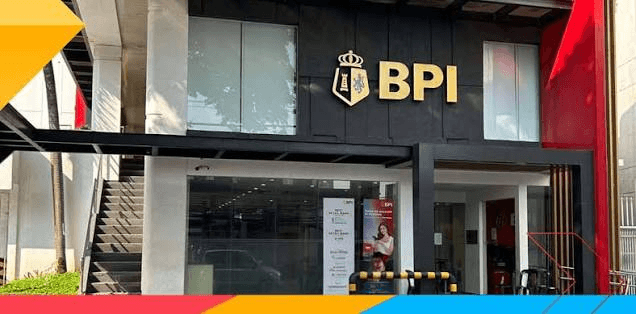
BPI
BPI is another major option and publishes relatively clear account-opening documentation for foreign nationals.
It offers:
- savings;
- checking;
- foreign-currency accounts;
- debit cards;
- mobile banking; and
- online transfers.
BPI may be particularly convenient if you already have a relationship with the bank or live near one of its branches.
Which Bank Would We Choose?
For a foreigner living long-term in Metro Manila, I would compare these three first:
Metrobank, BDO and BPI.
If I prioritized:
Digital transfers and everyday banking: Metrobank
Largest physical branch/ATM presence: BDO
Straightforward personal banking: BPI
The best bank, however, is often the one with a good branch close to where you actually live.
For many foreigners, having an accessible branch is still important because certain account issues, document updates and checking-account matters may require an in-person visit.nk they use because intra-bank transfers can be simpler.
Should You Open a Peso Account or Dollar Account?
For most foreign residents, the answer is:
Both. But, your primary day-to-day account should normally be in pesos.
Peso Account
Use a peso account for:
- rent;
- utilities;
- local transfers;
- restaurants;
- shopping;
- domestic travel;
- payroll;
- checks; and
- everyday expenses.
If you live in the Philippines, most of your expenses will ultimately be denominated in Philippine pesos.
US Dollar Account
A dollar account can be useful if you:
- receive income from overseas;
- receive retirement income;
- regularly transfer USD;
- want to retain part of your funds in dollars; or
- don’t want to convert all your foreign currency immediately.
BDO, for example, offers a US Dollar Savings account, while BPI also provides foreign-currency savings products.
However, maintaining a dollar account does not eliminate the need for a peso account if you are living locally.
Don’t Convert All Your Money at Once
A foreign resident may be tempted to transfer all savings to the Philippines immediately.
There is usually little reason to do this.
A more practical arrangement may be:
- maintain funds in your home country;
- keep sufficient working funds in a Philippine peso account;
- maintain a foreign-currency account where useful; and
- transfer additional money when needed.
This reduces unnecessary exposure to exchange-rate movements and avoids concentrating all funds in one place.
How to Transfer Money Into a Philippine Bank Account
There are several common methods.
International Bank Transfer
You can send money directly from an overseas bank account using an international wire transfer.
You will generally need:
- recipient’s full name;
- bank name;
- account number;
- bank address;
- SWIFT/BIC information; and
- sometimes the purpose of the transfer.
Fees can come from both the sending and receiving sides.
Remittance Services
International remittance providers can sometimes offer more competitive rates than traditional bank wires.
Before choosing one, compare:
- transfer fee;
- exchange rate;
- amount actually received;
- transfer speed; and
- sending limits.
Do not compare only the advertised fee.
A provider offering a zero transfer fee may compensate through a less favorable foreign-exchange rate.
Transfer Between Your Own Accounts
Many foreign residents maintain:
Home-country bank → international transfer service → Philippine bank
This can work well for monthly living expenses.
However, banks may ask about the source of funds, particularly where transactions are large or inconsistent with the customer’s expected profile.
That is normal compliance activity.
Why Banks Ask About Your Source of Funds
Some foreigners become concerned when a bank asks questions such as:
- Where does this money come from?
- What is your occupation?
- What business do you own?
- What is the purpose of the account?
- Why are you receiving money from overseas?
These questions are not necessarily a sign that something is wrong.
Philippine banks are subject to customer identification and anti-money-laundering requirements. Banks must establish the true identity of customers and maintain appropriate records.
Therefore, be prepared to provide evidence such as:
- employment contract;
- pension statement;
- business documents;
- investment records;
- bank statements;
- property sale documents; or
- other evidence establishing a legitimate source of funds.
Do Foreigners Need a Philippine TIN to Open a Bank Account?
A Philippine Tax Identification Number may be requested depending on the bank, account type and the customer’s tax or residency circumstances, but it is not necessarily a universal requirement for every foreign applicant.
Banks may ask for tax information as part of their customer due-diligence procedures, particularly if you:
- work in the Philippines;
- operate a Philippine business;
- earn Philippine-source income;
- invest locally; or
- have become subject to Philippine tax-reporting requirements.
If you already have a Philippine TIN, bring the documentation with you when applying.
If you do not yet have one, ask the bank whether it is required for the particular account you want to open rather than assuming that you cannot apply.
FATCA and Foreign Tax Information
Foreigners—particularly US citizens and persons subject to US tax reporting—may encounter additional questions.
Banks can ask about:
- citizenship;
- foreign tax residence;
- US taxpayer status;
- Tax Identification Numbers; and
- related compliance declarations.
Do not provide inaccurate information simply to make an account easier to open.
Banking compliance information should match your actual tax and residency status.
Online Banking and Mobile Apps
Once your account is open, activate online banking immediately.
A good Philippine bank account should allow you to:
- view balances;
- transfer funds;
- pay bills;
- send money to other banks;
- lock or manage debit cards;
- receive transaction notifications; and
- monitor account activity.
This is especially important for foreigners who travel frequently outside the Philippines.
Keep Your Philippine Mobile Number Active
Philippine banks often use local mobile numbers for:
- OTPs;
- security verification;
- transaction notifications; and
- account recovery.
If you leave the Philippines for several months, maintain access to the mobile number registered with your bank.
Losing the number can make account access considerably more inconvenient.
ATM Withdrawals
A Philippine debit card makes everyday cash withdrawals easier than repeatedly using an overseas ATM card.
Using an overseas card can expose you to:
- foreign ATM charges;
- international transaction fees;
- currency conversion fees; and
- unfavorable conversion rates.
If you live in the Philippines, transferring funds periodically into a local account and then using a local ATM card is generally more convenient.
InstaPay vs PESONet: How to Transfer Money Between Philippine Banks
Foreign residents quickly encounter two names when transferring money between Philippine banks:
InstaPay and PESONet.
They serve similar purposes but are useful in different situations.
InstaPay: Best for Immediate Transfers
InstaPay is designed for real-time transfers.
The recipient normally receives the money almost immediately, and the service operates 24 hours a day, seven days a week, including weekends and holidays. The BSP describes InstaPay as an almost immediate electronic transfer system with a maximum of ₱50,000 per transaction.
For Metrobank customers in 2026:
Maximum per transaction: ₱50,000
Maximum per day: ₱100,000
This means that if you need to send ₱80,000 urgently, for example, you may be able to make:
- one ₱50,000 InstaPay transfer; and
- another ₱30,000 InstaPay transfer,
provided you remain within Metrobank’s ₱100,000 daily limit.
InstaPay is therefore ideal for:
- rent payments;
- paying another person;
- emergency transfers;
- transferring between your own banks;
- paying suppliers;
- sending money to an e-wallet; and
- any payment that needs to arrive immediately.
PESONet: Better for Larger Transfers
For amounts above the ₱50,000 InstaPay per-transaction limit, PESONet is often the more practical option.
Metrobank currently allows PESONet transfers of up to ₱200,000 per day through its app.
Unlike InstaPay, however, PESONet is not instant.
Metrobank’s current schedule uses a 3:00 PM banking-day cutoff. Transfers made before the cutoff can be processed within the banking day, while transfers made after the cutoff, or during weekends and holidays, are processed on the next banking day.
So if you are transferring:
₱30,000 → InstaPay is usually the easier choice.
₱50,000 → InstaPay is usually suitable.
₱80,000 → either two InstaPay transfers, if your bank’s daily limit allows it, or PESONet.
₱150,000 → PESONet is normally more practical.
Does PESONet Take Several Days?
Usually, you should not describe PESONet simply as a transfer that “takes a few days.”
Under normal banking conditions, it is generally processed the same banking day or the next banking day, depending on the time the transfer is submitted.
For Metrobank, the important time is 3:00 PM.
A transfer made:
Monday at 10:00 AM
→ can generally be processed on Monday.
Monday at 5:00 PM
→ normally moves into the next banking-day processing cycle.
Friday night
→ will generally wait until the next banking day.
Weekends, holidays, system issues or the receiving institution’s processing can make the actual arrival feel longer.
So for PhilifeGuide, I recommend describing PESONet as:
A non-instant transfer system generally used for larger amounts, with settlement based on banking-day cutoffs.
That is more accurate than saying it routinely takes several days.
InstaPay vs PESONet at a Glance
| Feature | InstaPay | PESONet |
|---|---|---|
| Speed | Almost immediate | Banking-day processing |
| Availability | 24/7 | Subject to banking-day settlement |
| Metrobank per transaction | Up to ₱50,000 | Larger transfers permitted |
| Metrobank daily limit | ₱100,000 | ₱200,000 |
| Best for | Urgent/smaller transfers | Larger transfers |
| Weekend transfer | Immediate | Usually next banking day |
| Typical use | Rent, daily payments | Larger purchases or transfers |
Metrobank also announced in July 2026 that transfers through its app were being offered with zero InstaPay and PESONet fees under its current program, although fees and promotions can change, so readers should confirm the current amount in the app before transferring.
A Practical Example for a Foreigner
Suppose your monthly condominium rent is ₱45,000 and your landlord accepts bank transfers.
Use InstaPay.
The money can arrive immediately.
Now suppose you need to transfer ₱180,000 to pay a condominium deposit, advance rent and other move-in costs.
Instead of splitting the amount into multiple ₱50,000 InstaPay transactions, PESONet may be simpler, provided the payment does not need to arrive instantly.
This is one reason a good Philippine mobile-banking app matters more than many newcomers initially expect.
Maintaining Balance Requirements
Pay attention to the minimum monthly average daily balance, commonly abbreviated as MADB or ADB.
This is different from simply having the required amount in the account on the last day of the month.
For example, if an account requires a ₱10,000 monthly average balance and you keep only ₱2,000 for most of the month, depositing ₱10,000 on the final day may not be sufficient to meet the average-balance requirement.
Banks may charge fees when the required balance is not maintained.
Are Philippine Bank Deposits Insured?
Yes, deposits in member banks are covered by the Philippine Deposit Insurance Corporation, subject to applicable rules.
Effective March 15, 2025, the maximum deposit insurance coverage increased to:
₱1 million per depositor, per bank.
This remains the applicable maximum coverage in 2026.
If you maintain substantially more than ₱1 million in cash deposits, this is one reason to consider spreading funds across more than one bank rather than concentrating everything in a single institution.
Common Reasons a Foreign Bank Account Application May Be Delayed or Rejected
Several issues can complicate an application.
1. No Clear Philippine Address
Banks may be reluctant to open a standard account for someone who has no established residence.
Bring a:
- lease;
- utility bill;
- condominium document; or
- other acceptable proof of address.
2. Insufficient Immigration Documentation
An ACR I-Card and appropriate visa status can make the process easier.
3. Unclear Source of Funds
Be ready to explain:
- where your money comes from;
- what you do for a living;
- how much you expect to deposit; and
- how the account will be used.
4. Inconsistent Information
Make sure your:
- name;
- address;
- date of birth;
- nationality;
- tax information; and
- employment information
are consistent across your documents.
5. Applying for the Wrong Account
Some digital accounts have narrower eligibility requirements than conventional branch-opened accounts.
For example, BPI’s Digital SaveUp terms currently require a Philippine resident and a valid Philippine government-issued ID, among other requirements.
A foreigner who cannot satisfy those digital-account conditions may still be able to apply for another account through a branch.
Step-by-Step: Opening a Bank Account in the Philippines as a Foreigner
Step 1: Choose Two Banks
Do not go to only one bank.
Start with perhaps:
BDO and BPI
and compare requirements.
Step 2: Visit or Contact the Branch
Ask specifically:
“I am a foreign national residing in the Philippines. What are your requirements for opening a peso savings account and a personal checking account?”
Mention both accounts.
This prevents you from discovering later that the checking account needs additional documentation.
Step 3: Prepare Your Documents
Bring:
- passport;
- ACR I-Card if applicable, or SRRV/PRA ID Card for SRRV holders;
- current visa or residency documentation;
- Philippine proof of address;
- Philippine mobile number;
- tax information if applicable;
- employment/business/pension evidence;
- proof of source of funds; and
- sufficient money for the initial deposit.
Bring original documents.
Step 4: Open the Savings Account
Your savings account becomes your primary everyday banking account.
Activate:
- debit card;
- online banking;
- mobile app;
- fund transfers; and
- transaction notifications.
Step 5: Open the Checking Account
If the bank allows it, open the checking account at the same time.
Otherwise, establish the savings account first and ask when you can apply for checking facilities.
For a long-term foreign resident, this is an important step.
Step 6: Order Your Checkbook
When you receive the checkbook:
- keep it secure;
- understand how to write Philippine checks properly;
- record every check issued; and
- never issue a check without sufficient funds.
Checks are legal payment instruments, not simply informal promises to pay.
Step 7: Fund the Account
Transfer enough money to maintain the required average balance plus normal monthly expenses.
Avoid keeping the balance exactly at the minimum.
For example, if your minimum required balance is ₱10,000, keeping only ₱10,001 leaves no practical buffer for fees or transfers.
Using Post-Dated Checks for Condo Rent
This deserves special attention for foreigners moving to Manila.
A typical condominium lease may ask for:
- security deposit;
- advance rent; and
- post-dated monthly checks.
For example, a landlord may request:
12 post-dated checks for a one-year lease.
This is one of the main reasons we recommend getting a checking account early.
You do not want to find your preferred condominium, negotiate the lease, agree on the price and then discover that the landlord requires checks you cannot issue.
If you are preparing to rent, read Renting a Condo in Manila: Practical Guide for Foreigners in 2026 before signing a lease.
Should You Open a Joint Account?
A joint account may be appropriate for:
- married couples;
- partners sharing household expenses; or
- family members managing expenses together.
But understand the withdrawal rules carefully.
Common structures may include arrangements where:
- either account holder can transact; or
- both account holders must authorize certain transactions.
Do not open a joint account simply because someone tells you it is easier.
Understand who controls the funds.
Never Let Someone Else Use Your Bank Account
Foreigners occasionally encounter requests such as:
“Can I receive money through your account?”
or:
“Just let me use your account temporarily.”
Don’t do this casually.
You are responsible for activity through an account held in your name, and unexplained third-party transactions can create compliance problems.
This is particularly important when operating a business.
Personal and business funds should generally be kept separate.
For foreigners establishing companies in the Philippines, see our Foreign-Owned Business Structures in the Philippines: Sole Proprietorship, Partnership or Corporation?.
Beware of Banking Scams
Banks will not protect you from every scam simply because money passed through a bank account.
Be particularly cautious of:
- phishing emails;
- fake banking websites;
- fake customer-service calls;
- requests for OTPs;
- QR-code scams;
- investment schemes;
- messages claiming your account will immediately be closed; and
- people asking you to transfer money to “verify” an account.
Never disclose an OTP to another person.
The Bangko Sentral ng Pilipinas Verifier allows consumers to check whether a financial institution is registered or supervised by the BSP.
How Much Money Should You Keep in Your Philippine Account?
That depends on your circumstances.
A reasonable approach for many foreign residents is to maintain enough for:
- several months of living expenses;
- rent;
- utility payments;
- emergency needs;
- checking-account commitments; and
- upcoming major expenses.
But there is generally no need to move your entire overseas savings into the Philippines simply because you now live here.
Our Cost of Living in the Philippines in 2026 can help you estimate a practical monthly cash requirement.
Recommended Banking Setup for a Foreigner
For someone who plans to live in the Philippines for a year or longer, a practical setup is:
| Account | Purpose |
|---|---|
| Peso savings account | Everyday spending, InstaPay/PESONet transfers, ATM and bills |
| Peso checking account | Post-dated checks, rent and contractual payments |
| USD/foreign-currency account | Optional for funds received from abroad |
| Home-country account | Savings and international financial access |
The most important combination is:
Peso Savings + Peso Checking
For a foreign resident, this is considerably more useful than relying only on a savings account.
Final Checklist Before Opening an Account
Before visiting the bank, check that you have:
- valid passport;
- ACR I-Card if applicable;
- immigration documentation;
- Philippine address;
- proof of billing;
- Philippine mobile number;
- TIN if available;
- source-of-funds documents;
- initial deposit;
- savings-account requirements; and
- checking-account requirements.
And ask the branch these questions:
- Can a foreign national with my visa status open this account?
- Is an ACR I-Card required?
- What is the initial deposit?
- What is the minimum average balance?
- Are there below-balance fees?
- Can I obtain a debit card?
- Can I use mobile banking?
- Can I receive international transfers?
- Can I open a dollar account?
- Can I open a personal checking account?
- When can I receive my first checkbook?
Getting these answers before applying can save you a second branch visit.
The Bottom Line
Opening a bank account in the Philippines as a foreigner is entirely possible, but the experience varies depending on your immigration status, documentation and the bank’s internal compliance requirements.
For most long-term foreign residents, I recommend opening both:
a savings account and a checking account.
The savings account handles everyday banking.
The checking account gives you access to something foreigners often overlook until they need it: post-dated checks.
Because checks remain common in Philippine leases and other contractual arrangements, a checking account is not legally mandatory, but it is practically a must for many foreigners who intend to live in the Philippines long-term.
Get your banking setup established early—preferably before you need to sign a condominium lease or make other major commitments.
Official Resources
For current requirements and banking information, consult:
- Bangko Sentral ng Pilipinas – Financial Products and Services for information on BSP-supervised banks and deposit products.
- BSP Financial Institution Verifier to check whether a financial institution is registered or supervised by the BSP.
- BPI Account Opening Requirements for its current requirements for foreign nationals.
- BDO Peso Checking Account for current BDO checking-account requirements and fees.
- BPI Savings and Checking Deposit Rates for current minimum deposits and balances.
- Philippine Deposit Insurance Corporation for current deposit-insurance rules. Deposits are presently insured up to ₱1 million per depositor, per bank.
Last updated: September 2026.
Disclaimer: This article provides general information and does not constitute legal, tax or financial advice. Account eligibility, documentary requirements, fees and minimum balances can change and may vary by branch and individual customer. Confirm current requirements directly with the bank before applying.
Leave a Reply