
The cost of living in the Philippines in 2026 can vary dramatically depending on where you live and the lifestyle you choose. One of the first questions foreigners ask when considering retirement, relocation, or a long stay in the country is simple: How much money do I actually need every month?
Unfortunately, there is no single answer.
A retiree living in Dumaguete, cooking at home and using public transportation can spend dramatically less than someone renting a modern condominium in Makati or BGC, eating at restaurants regularly, using Grab every day, and travelling frequently.
The Philippines can still offer relatively affordable living, but the idea that a foreigner can automatically live a luxurious life here on a very small budget is increasingly outdated.
Prices have risen significantly in 2026. According to the Philippine Statistics Authority, headline inflation was 6.4% nationwide in June 2026, while inflation in the National Capital Region was 4.9%. Food, housing-related expenses, utilities and transportation remain important parts of household budgets.
So how much should you realistically budget?
Table of Contents
Cost of Living in the Philippines in 2026: The Short Answer
For one person, a reasonable monthly budget in 2026 might look like this:
| Lifestyle | Provincial / smaller city | Metro Manila |
|---|---|---|
| Modest | ₱40,000–₱60,000 | ₱55,000–₱75,000 |
| Comfortable | ₱60,000–₱90,000 | ₱90,000–₱140,000 |
| Higher-end | ₱100,000+ | ₱150,000–₱250,000+ |
For a couple, approximately:
| Lifestyle | Approximate monthly budget |
|---|---|
| Modest provincial lifestyle | ₱60,000–₱90,000 |
| Comfortable provincial lifestyle | ₱90,000–₱130,000 |
| Comfortable Metro Manila lifestyle | ₱120,000–₱180,000 |
| Higher-end Manila lifestyle | ₱200,000+ |
These are rough estimates rather than official government figures. Your actual expenses depend heavily on housing, air-conditioning, transportation, healthcare and lifestyle.
Housing is usually the biggest expense
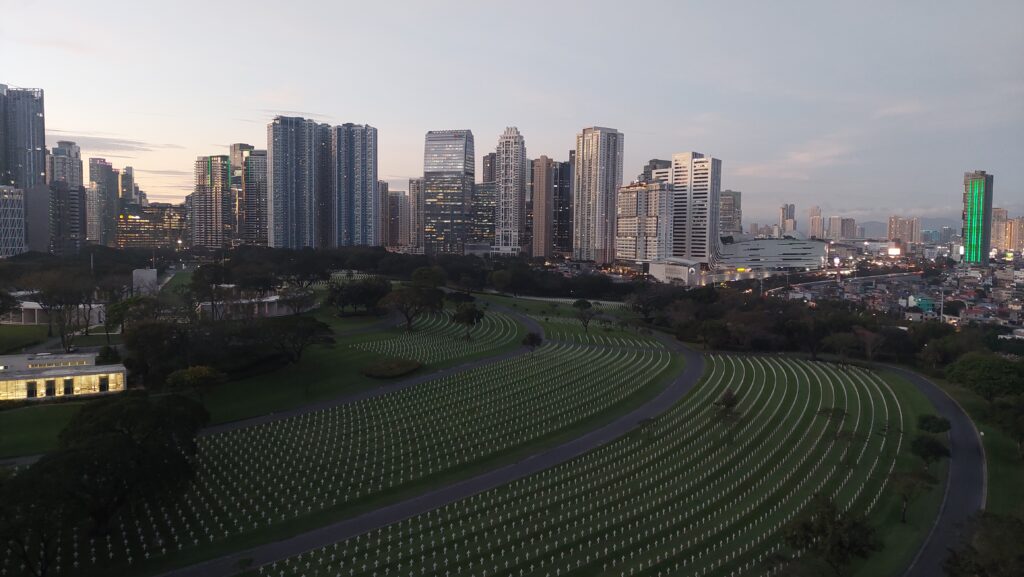
Where you choose to live makes an enormous difference.
In July 2026, crowdsourced Manila cost data placed a furnished 45-square-meter studio at approximately ₱23,700 per month in a normal area and around ₱37,800 in a more expensive district.
A larger furnished 85-square-meter residence was estimated at around ₱43,100 in a normal area and more than ₱83,000 in an expensive area. As always, these figures should be treated as indicative rather than guaranteed market prices.
In premium areas such as below, rent can easily consume a large portion of the monthly budget.
- Bonifacio Global City (BGC)
- Makati
- Rockwell
- parts of Ortigas
Outside Metro Manila, housing can be significantly cheaper.
For example, May 2026 crowdsourced figures for Dumaguete placed an average one-bedroom apartment at approximately ₱13,000–₱15,000 per month, although newer properties and homes popular with foreigners can cost considerably more.
Recent residents in Iloilo reported small studios around ₱9,000–₱15,000, usually excluding utilities.
This is why saying simply that “the Philippines is cheap” can be misleading.
The Philippines is not one housing market. BGC and Dumaguete can feel like two completely different countries when it comes to rent.
Electricity can surprise newcomers
Electricity is one expense that many foreigners underestimate.
Air-conditioning can run for several hours every day because of the tropical climate. Large refrigerators, water heaters, induction cookers, clothes dryers and electric-vehicle charging can increase the bill further.
A small condominium occupied by one person might spend approximately ₱2,500–₱5,000 per month. A larger household with extensive air-conditioning could spend ₱6,000–₱12,000 or considerably more.
Manila crowdsourced figures in July estimated utilities for one person in a 45-square-meter studio at about ₱4,130 per month, while utilities for two people in an 85-square-meter residence were around ₱7,900.
These figures should again be treated only as rough benchmarks. Your air-conditioning habits matter enormously. Someone who uses air-conditioning only at night may have a very different electricity bill from someone who keeps a large condominium cooled throughout the day.
Internet and mobile service
Internet access in major Philippine cities is generally much better than it was a decade ago. Fiber plans from major providers are widely available in Metro Manila and many provincial cities.
For example, Globe’s current GFiber offering includes a ₱1,499-per-month 300 Mbps plan, while premium plans reach higher speeds and prices.
A reasonable household budget is: Home internet: ₱1,300–₱2,500 per month
Mobile service can range from a few hundred pesos for prepaid users to considerably more for postpaid plans with large data allowances. For most people, budgeting approximately ₱2,000–₱3,500 combined for home internet and mobile service provides a reasonable margin.
How much does food cost?

Food is one of the most flexible parts of a Philippine budget. Someone who buys vegetables, rice, fish and meat from local markets and cooks at home can live relatively inexpensively.
Someone who regularly buys imported Korean, Japanese, European or American products can spend much more.
As of July 2026, indicative Manila prices included approximately:
- Chicken breast: ₱154 per 500 grams
- 12 eggs: ₱139
- Milk: ₱128 per liter
- Tomatoes: ₱134 per kilogram
- Fast-food combo meal: around ₱281
- Business-district lunch with a drink: around ₱507
For one person, I would budget approximately:
Economical
₱10,000–₱15,000 per month. Mostly home cooking, local ingredients and inexpensive restaurants.
Comfortable
₱18,000–₱30,000 per month. Better groceries, coffee shops, restaurants and some imported food.
Frequent dining out
₱30,000–₱50,000+ per month. Especially in BGC, Makati and upscale malls.
A couple does not necessarily spend twice as much because groceries can be shared.
Transportation: cheap or surprisingly expensive
Transportation costs depend almost entirely on lifestyle. A person who walks and uses jeepneys, buses or trains may spend very little. Public transport could cost only a few thousand pesos per month. But these options are not applicable to foreign retirees. This is because public transportation is simply horrible in the Philippines.
A retiree who relies heavily on Taxi or Grab can spend:
₱6,000–₱15,000+ per month depending on the frequency of trips.
The most viable option for a retiree is owning a car. In addition to the cost of buying a car, cost should include:
- Fuel
- Parking
- Toll fees
- Insurance
- Registration
- Maintenance
- Repairs
- Depreciation
Metro Manila condominium parking alone can become a significant expense. If one bedroom unit do not have a parking space comes with it, then you should rent a parking space. In a condo, a parking lot usually cost around P5,000 to P8,000 depending on the location.
Transportation was also one of the major inflationary categories in 2026. Philippine transport prices were 12.8% higher year-on-year in June, according to the Philippine Statistics Authority.
For retirees who do not need to commute every day, choosing a walkable neighborhood can save a surprising amount of money.
Healthcare should not be ignored
One of the biggest budgeting mistakes retirees can make is calculating living expenses without allowing anything for healthcare.
Routine consultations and medicines may appear relatively affordable compared with countries such as the United States, but serious hospitalization, surgery or long-term treatment can still be expensive. Since foreigners can not use public hospitals, private hospitals are very expensive. That is the reason a retiree should have a health insurance.
Therefore, your budget should consider:
- Health insurance
- Routine consultations
- Prescription medicines
- Dental treatment
- Laboratory tests
- Emergency care
- A medical emergency fund
A healthy younger person may spend very little in an ordinary month. An older retiree may need to allocate significantly more.
Therefore, rather than claiming that everyone needs a particular amount, a safer approach is to include at least ₱3,000–₱10,000 per month as a healthcare/insurance allowance, plus a separate emergency fund where possible.
Private international insurance can cost much more depending on age and coverage.
Sample Monthly Budgets
Example 1: Modest single-person budget
Suppose you live outside the most expensive areas and cook much of your food at home.
| Expense | Monthly budget |
|---|---|
| Rent | ₱18,000 |
| Electricity/water | ₱4,000 |
| Internet/mobile | ₱2,000 |
| Groceries/food | ₱14,000 |
| Transportation | ₱4,000 |
| Healthcare | ₱3,000 |
| Entertainment/personal | ₱5,000 |
| Miscellaneous | ₱5,000 |
| Total | ₱55,000 |
This lifestyle is possible, but it requires some attention to spending.
Example 2: Comfortable single life in Metro Manila
Now consider someone living in a modern condominium, eating out several times a week and regularly using Grab.
| Expense | Monthly budget |
|---|---|
| Condo rent | ₱35,000 |
| Utilities | ₱6,000 |
| Internet/mobile | ₱2,500 |
| Food/groceries | ₱22,000 |
| Transportation | ₱10,000 |
| Healthcare/insurance | ₱5,000 |
| Leisure/gym/coffee | ₱12,000 |
| Miscellaneous | ₱7,500 |
| Total | ₱100,000 |
For many foreigners, around ₱90,000–₱120,000 per month is a more realistic picture of comfortable solo life in Manila than the very low budgets sometimes promoted online.
As another real-world reference, one recent Manila resident reported averaging approximately US$3,800 per month while living in a modern BGC one-bedroom condominium and travelling internationally frequently. His budget included roughly US$1,090 for housing and utilities and US$770 for travel, illustrating just how much lifestyle choices can expand spending.
That is not a “normal” requirement. It simply shows the upper end of what expat life can look like.
Example 3: Comfortable retired couple
A couple living outside the most expensive parts of Manila might budget:
| Expense | Monthly budget |
|---|---|
| Rent | ₱30,000 |
| Utilities | ₱6,000 |
| Internet/mobile | ₱3,000 |
| Food | ₱25,000 |
| Transportation | ₱8,000 |
| Healthcare | ₱10,000 |
| Dining/leisure | ₱12,000 |
| Household/personal | ₱6,000 |
| Miscellaneous reserve | ₱10,000 |
| Total | ₱110,000 |
A similar lifestyle in BGC or central Makati could easily cost ₱140,000–₱180,000 or more.
Can you live in the Philippines on ₱50,000 a month?
Yes. But the more useful question is:
Would you enjoy the lifestyle that ₱50,000 provides?
A single person living in a provincial city, renting a modest apartment, cooking regularly and avoiding expensive habits could potentially live on ₱40,000–₱50,000.
In Manila, ₱50,000 becomes much tighter once rent is included. For example, one Makati resident shared a 2026 budget of approximately ₱43,600, including ₱19,000 rent, about ₱3,600 for utilities, ₱10,000 groceries and limited transportation spending because most destinations were within walking distance.
It can be done. But there is little room for major travel, medical emergencies, expensive restaurants or unexpected costs.
Is ₱100,000 a month enough?
For one person, ₱100,000 can provide a comfortable lifestyle in many parts of the Philippines.
Outside Metro Manila, it can provide a very comfortable lifestyle if housing costs are controlled.
In Manila, it is comfortable but not necessarily luxurious—particularly in BGC, Rockwell or premium Makati developments.
For a couple, ₱100,000 can still work well outside the most expensive neighborhoods, but healthcare, travel and housing can push the budget higher.
What about ₱150,000 a month?
A household income or retirement budget of ₱150,000 per month provides considerable flexibility in most Philippine locations.
It can support:
- A good condominium or house
- Regular restaurant meals
- Private transportation
- Domestic travel
- Better healthcare provision
- Hobbies and entertainment
However, in high-end Metro Manila, even ₱150,000 can disappear surprisingly quickly if you combine:
- ₱50,000+ rent
- Car ownership
- Fine dining
- Imported groceries
- Frequent nightlife
- International travel
Affordability is always relative to lifestyle.
Manila versus provincial cities
One of the easiest ways to reduce your Philippine living costs is simply to leave Metro Manila.
Metro Manila:
>Advantages
- Best selection of major hospitals
- International airport access
- Shopping
- Restaurants
- Business opportunities
- International communities
>Disadvantages
- High housing cost
- Traffic
- Parking
- More expensive restaurants
- Higher transportation spending
Cebu:
Cebu offers international connectivity, hospitals, beaches and a large expat community, although premium areas such as Cebu IT Park and Cebu Business Park can now approach Manila prices.
Dumaguete:
Dumaguete remains popular with retirees because of its slower pace, universities, English-speaking environment and relatively affordable housing. Current crowdsourced data suggest one-bedroom rents around ₱13,000–₱15,000 on average, though desirable expat properties can cost more.
Iloilo:
Iloilo offers modern development, hospitals, restaurants and a relatively relaxed atmosphere. Recent residents report studio rents beginning around ₱9,000–₱15,000, although newer condominiums cost more.
Davao:
Davao offers the amenities of a large city while generally providing lower housing costs than central Metro Manila, although the right neighborhood and access to healthcare should be considered carefully.
Expenses foreigners often forget
Your monthly calculation should also allow for expenses that do not happen every month.
These can include:
- Visa extensions or residency fees
- Flights home
- Domestic vacations
- Dental work
- Major medical treatment
- Air-conditioner repairs
- Appliance replacement
- Condo association charges (if you buy a Condo)
- Car registration and insurance
- Immigration documentation
- Furniture
- Security deposits
- Moving expenses
- Emergency travel
This is why I would not recommend moving to the Philippines with exactly the amount required for ordinary monthly expenses.
A reasonable budget should include a margin of at least 10–20% for unexpected costs, in addition to emergency savings.
The Philippines can be inexpensive—but living like a foreigner may not be
This is perhaps the most important point.
Local food can be inexpensive. Public transportation can be inexpensive. Provincial housing can be inexpensive. Domestic services can be inexpensive.
But if you want:
- A modern luxury condominium
- Western or Korean groceries
- A private vehicle
- Daily Grab rides
- Imported wine
- Premium restaurants
- International-standard healthcare
- Frequent international travel
your Philippine cost of living may not feel particularly cheap.
The Philippines gives people choices. Someone can live simply for ₱50,000 per month, comfortably for ₱100,000, or spend ₱250,000 without difficulty.
So, how much do you really need?
For someone considering retirement or relocation in 2026, my practical starting point would be:
Single person outside Manila:
Plan for ₱60,000–₱90,000 per month for a comfortable lifestyle.
Single person in Metro Manila:
Plan for approximately ₱90,000–₱140,000.
Retired couple outside Manila:
Approximately ₱90,000–₱130,000.
Retired couple in a good Metro Manila neighborhood:
Approximately ₱130,000–₱180,000+.
These figures are not minimum survival budgets. They are intended as more realistic planning ranges for foreigners who want reasonable housing, food, transportation, healthcare and leisure without constantly worrying about every peso.
And the most important advice is simple:
Do not decide to retire in the Philippines based only on internet cost-of-living tables.
Spend several weeks—or preferably a few months—in the city you are considering.
Rent a condominium. Buy groceries. Use the transportation. Pay an electricity bill. Visit the hospitals. Experience the traffic.
Then calculate the cost of your life, not somebody else’s. That is the number that really matters.
🟦 Continue Exploring the Philippines
You may also enjoy:
Planning a move or retirement in the Philippines?
PhilifeGuide provides practical research and planning support for people considering retirement, relocation or an exploratory stay in the Philippines.
Disclaimer: This article provides general information only. Prices are approximate and can vary considerably by location, property, lifestyle and individual circumstances. It does not constitute financial, immigration, tax, medical or investment advice.
Updated August 2026
Leave a Reply