
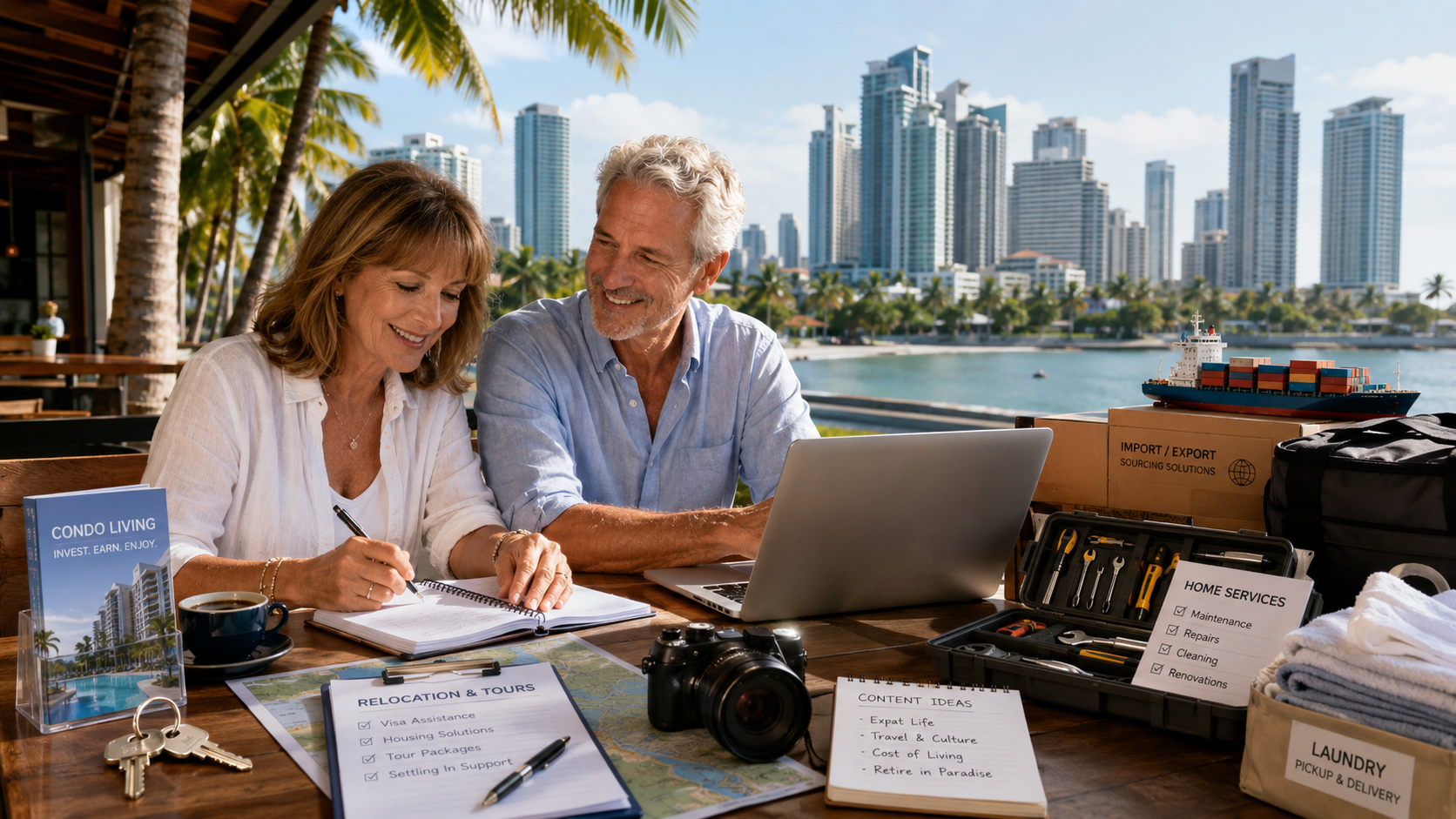
The best businesses for retirees in the Philippines are usually not the largest or most expensive businesses to start. They are businesses that use the retiree’s experience, knowledge, network, and available time without putting retirement savings at unnecessary risk.
For many retirees and expatriates who settle in the Philippines, retirement becomes the beginning of a second—or even third—chapter of life. After spending years building a career, managing a business, raising a family, or working overseas, suddenly having too much free time can feel surprisingly uncomfortable.
At first, the slower pace may be exactly what you wanted.
You travel. You enjoy restaurants. You play golf. You spend more time with family. You finally have time to relax.
But after several months or years, another question may begin to appear:
What should I do next?
For some retirees, the motivation is financial. They want an additional source of income to supplement their pension.
For others, money is not the main reason. They want something meaningful to do, an opportunity to meet people, a way to use decades of professional experience, or simply a reason to get up in the morning with a new project in mind.
Starting a business can provide that purpose.
But starting a business in retirement should be approached differently from building a company at age 30.
The goal should not be to risk your retirement savings, work 70 hours a week, or create another stressful career.
A good retirement business should ideally be:
- Manageable
- Relatively low-risk
- Based on skills or experience you already have
- Capable of starting small
- Legal for a foreign investor to own and operate
- Flexible enough to fit your retirement lifestyle
For many retirees, the best opportunities are not restaurants, resorts, bars, or large retail stores.
They are often service businesses, consulting, digital businesses, property-related services, and specialized coordination businesses where experience and trust matter more than large amounts of capital.
Best Retirement Businesses in the Philippines at a Glance
- Best for low startup cost: Website, blog, YouTube channel, consulting, online training
- Best for using professional experience: Specialized consulting and coaching
- Best for recurring local demand: Property management and home maintenance coordination
- Best for retirees with international contacts: Import, export, and product-sourcing services
- Best for flexible or part-time work: Digital publishing, consulting, and online training
- Best for people who enjoy working with customers: Relocation assistance, tours, and senior assistance
- Businesses requiring more operational management: Laundry delivery, transportation assistance, property support
- Main legal concern for foreign retirees: Foreign ownership restrictions, work authorization, permits, and professional licensing
- Best overall strategy: Start small, test demand, and avoid putting a large portion of retirement savings at risk
Table of Contents
Best Businesses for Retirees in the Philippines: Quick Comparison
| Business Idea | Startup Cost | Operational Complexity | Physical Involvement | Best Suited For |
|---|---|---|---|---|
| Property Management | Low–Medium | Medium | Medium | Retirees with strong local networks and good organizational skills |
| Retirement & Relocation Assistance | Low | Medium | Medium | Long-term residents who know local systems and neighborhoods well |
| Website / Blog / YouTube | Low | Low–Medium | Low | Writers, photographers, content creators, and patient long-term builders |
| Specialized Consulting | Low | Low | Low | Retirees with deep professional or industry experience |
| Online Training & Coaching | Low | Low | Low | Experienced professionals who enjoy teaching |
| Specialized Tours & Experiences | Medium | Medium–High | High | Social retirees with strong local knowledge and tourism interests |
| Home Maintenance Coordination | Low–Medium | Medium | Medium | People with reliable contractor networks and strong quality-control skills |
| Laundry Pickup & Delivery | Medium | High | Medium–High | Operators comfortable with logistics, scheduling, and customer service |
| Senior Transportation & Assistance | Medium | High | High | Service-oriented retirees with strong local networks and operational discipline |
| Import / Export / Product Sourcing | Low–High | Medium–High | Low–Medium | Retirees with international business contacts and sourcing experience |
Startup cost and complexity can vary significantly depending on how the business is structured. A consulting or sourcing business may begin with very little capital, while a business that owns vehicles, inventory, equipment, or physical premises can require substantially more investment.
For most retirees, the safest starting point is usually a business based on knowledge, coordination, or digital services rather than one requiring large inventories, vehicles, equipment, or commercial premises. This allows the business idea to be tested before significant retirement capital is committed.

Before Starting a Business in the Philippines
Foreign retirees need to understand an important point:
Being allowed to live in the Philippines does not automatically mean you can own or personally work in every type of Philippine business.
Foreign ownership rules in the Philippines are more flexible than many retirees assume. The familiar 60/40 rule does not apply to every business, and many activities may allow majority or even 100% foreign ownership when the applicable legal and capitalization requirements are satisfied.
Before choosing any of the business ideas below, read our Foreign Ownership in the Philippines: What Businesses Can Foreigners Own in 2026? guide to understand which activities are open to foreign investors and which remain restricted.
Foreign ownership of a company and the right to personally work in that company are separate issues. A foreign national who actively works for a Philippines-based business may need the appropriate employment authorization even when he or she owns shares in the company. The Department of Labor and Employment provides current guidance through its Alien Employment Permit information and 2026 AEP guidance.
Investors who want to check the government source directly can also review the Philippine Board of Investments’ Doing Business FAQs. The BOI explains that foreign investors may generally own up to 100% of an enterprise when the proposed activity is not restricted under the Foreign Investment Negative List or another applicable law.
The exact structure may also depend on:
- Nationality
- Business activity
- Amount of investment
- Corporate structure
- Immigration status
- Whether you will actively work in the company
- Professional licensing requirements
- Local-government permits
- Industry-specific regulations
Once you have confirmed that the proposed business and ownership structure are legally possible, the next issue is registration. Depending on the structure and activity, this can involve the SEC or DTI, BIR registration, barangay clearance, a mayor’s or business permit, and industry-specific approvals.
Our How to Register a Business in the Philippines: A Practical Guide for 2026 explains the general registration sequence and the role of the different government agencies.
Corporations are registered through the Securities and Exchange Commission, and foreign investors should confirm that the company’s proposed purpose and foreign-equity structure are acceptable before committing capital. The SEC eSPARC registration system is the SEC’s online platform for company registration.
Therefore, treat the following ideas as business concepts to investigate, not automatic permission to operate them.
With that in mind, here are ten businesses that may be particularly suitable for retirees and expatriates in the Philippines.
Finding an interesting business idea is only the first step. A business that suits one retiree may be completely inappropriate for another because capital, professional experience, risk tolerance, desired working hours, and management responsibilities can be very different.
Before choosing from the ten ideas below, see our guide to How to Choose the Right Retirement Business in the Philippines for a practical framework for comparing opportunities.
1. Property Management for Foreign Condominium Owners
Many foreign condominium owners spend only part of the year in the Philippines.
When they are overseas, someone still needs to check the property, coordinate repairs, communicate with tenants, supervise cleaning, and handle everyday problems.
That creates an opportunity for a small property-support business.
Services might include:
- Unit inspections
- Tenant coordination
- Rent-payment administration
- Cleaning supervision
- Repair coordination
- Utility-payment assistance
- Move-in and move-out assistance
- Key management
- Furnishing coordination
The advantage of this type of business is that the owner does not need to personally perform every service.
Instead, the business can build a reliable network of cleaners, plumbers, electricians, air-conditioning technicians, painters, and other contractors.
Trust is the real product.
A foreign owner living in Korea, Japan, Australia, Europe, or the United States may be willing to pay for someone reliable who can visit the condominium and solve a problem quickly.
Understanding how condominiums actually operate is important before offering this type of service. Association dues, building administration, repairs, parking, utilities, tenant coordination, and transportation all affect the experience of condominium owners and tenants.
Our Condo Living and Transportation in Manila for Newbies guide explains many of these practical issues from the resident’s perspective.
However, property management must be structured carefully. Activities involving licensed real-estate brokerage or other regulated professional services should be handled only by properly qualified professionals.
2. Retirement and Relocation Assistance
Moving to another country sounds exciting until the practical problems begin.
Where should I live?
Which hospital should I use?
How do I get internet installed?
Should I buy a car?
Which neighborhoods are suitable for retirees?
Budget expectations can also vary significantly depending on location and lifestyle. Someone considering a relocation business should be familiar with realistic housing, food, transportation, utilities, healthcare, and discretionary spending.
Our Cost of Living in the Philippines in 2026 provides a practical starting point for these discussions.
How do I find a trustworthy cleaner, driver, or repair technician?
These questions create an opportunity for a retirement and relocation assistance business.
Anyone offering relocation assistance should understand why retirees choose the Philippines as well as the practical realities they encounter after arriving.
Our guide to 12 Reasons Why the Philippines Is One of the Top Retirement Destinations provides a broader view of the country’s appeal, while the SRRV Philippines 2026: Complete Retirement Visa Guide explains one of the principal long-term residence options available to qualified foreign retirees.
Possible services include:
- Airport pickup coordination
- Neighborhood orientation
- Condominium viewing coordination
- Local transportation orientation
- SIM-card setup assistance
- Utility setup coordination
- Hospital orientation
- Supermarket and shopping orientation
- Introduction to verified service providers
- Moving assistance
- Settling-in packages
This can be particularly suitable for a retiree who has already spent several years living in the Philippines and understands the problems newcomers commonly encounter.
The business should not provide legal, immigration, tax, or other regulated professional advice unless properly qualified.
Instead, it can work with lawyers, accountants, accredited retirement professionals, and other specialists.
Relocation clients also need help thinking beyond visas. Healthcare, housing, transportation, banking, insurance, monthly expenses, and emergency planning all affect whether a move will actually work over the long term.
Our Preparing for Retirement in the Philippines: A Practical Guide provides a broader checklist of the issues future retirees should consider before relocating.
3. Expat-Focused Website, Blog, YouTube Channel or Digital Media Business
This is one of the easiest businesses to start with relatively little capital.
A retiree who has genuine experience living in the Philippines can create useful content about:
- Retirement
- Cost of living
- Visas
- Healthcare
- Banking
- Condominium living
- Transportation
- Restaurants
- Provincial travel
- Cultural differences
- Property issues
- Product reviews
- Interviews with foreign residents
The key is specificity.
There are already thousands of generic articles about the Philippines.
A useful website answers questions such as:
- How much electricity does a condominium actually cost?
- Which areas are convenient without owning a car?
- What should a retiree check before choosing a hospital?
- Is it better to rent or buy?
- How difficult is it to live outside Metro Manila?
- What problems do foreigners usually discover only after moving?
This business requires patience.
A website or YouTube channel may take months—or longer—to attract meaningful traffic.
But unlike a physical shop, the financial risk can remain relatively small, and good content can continue generating traffic for years.
Revenue may eventually come from:
- Advertising
- Affiliate marketing
- Sponsorships
- Consulting leads
- Paid guides
- YouTube revenue
- Referral arrangements
- Related services
The important thing is to treat it as a long-term digital asset rather than expecting immediate income.
4. Specialized Business Consulting
Many retirees possess something extremely valuable:
30 or 40 years of professional experience.
A retired engineer, hotel manager, banker, project manager, manufacturer, development specialist, logistics executive, salesperson, or construction professional may know more about a particular industry than someone starting a completely new business.
Instead of opening a restaurant because restaurants seem easy to understand, a retiree can monetize what he or she already knows.
Potential clients may include:
- Philippine SMEs
- Foreign companies entering the Philippines
- Hotels and resorts
- Manufacturers
- Exporters
- NGOs
- Development projects
- Social enterprises
- Startups
- Family-owned businesses
Specialization is important.
“Business consultant” is vague.
“International procurement adviser for small Philippine manufacturers” is much clearer.
“Hotel operations consultant for small island resorts” immediately tells potential clients what problem you solve.
Your experience becomes the product.
5. Online Training and Professional Coaching
Professional knowledge can also be converted into education.
A retiree can teach clients in the Philippines or overseas through:
- Zoom sessions
- Recorded courses
- Small workshops
- Corporate training
- One-on-one coaching
- Membership communities
Potential subjects include:
- Business English
- International sales
- Leadership
- Project management
- Proposal writing
- Export preparation
- Hospitality service
- Workplace communication
- Technical skills
- Presentation skills
- Industry-specific knowledge
The advantage is that the business can often operate from home and serve clients outside the Philippines.
This makes it attractive to retirees who want flexibility and do not want to manage employees, inventory, or physical premises.
Care is still necessary when activities fall into regulated education or professional fields.
6. Specialized Tours and Local Experiences
The Philippines receives visitors with very different interests.
Instead of competing directly with large tour companies, a small business can specialize.
Examples include:
- Retirement-area inspection trips
- Golf tours
- Food tours
- Historical walks
- Photography trips
- Fishing excursions
- Birdwatching tours
- Cultural orientation programs
- Trips designed for older travelers
- Korean-language local experiences
- Specialty provincial itineraries
A retiree who knows one destination extremely well may have an advantage over a large company selling generic packages.
For example, a “three-day retirement inspection tour of Dumaguete” may be more valuable to a potential retiree than a traditional sightseeing package.
However, tourism activities can involve Department of Tourism accreditation, local permits, transportation regulations, and other requirements depending on how the business is structured.

7. Home Maintenance Coordination
Finding a reliable repair worker can be frustrating anywhere.
For foreign condominium owners and busy residents, it can be even more difficult.
A home-maintenance coordination company could maintain a screened network of:
- Air-conditioning technicians
- Electricians
- Plumbers
- Painters
- Carpenters
- Appliance technicians
- Cleaners
- Pest-control providers
- Internet technicians
- Movers
The customer contacts one company.
The company finds and coordinates the appropriate technician.
This sounds simple, but the real business is trust and quality control.
Customers will remember the company that solved their leaking pipe quickly.
They will also remember the company that sent an unreliable technician.
Therefore, contractor screening and service monitoring are essential.
This type of business can also connect naturally with property-management services.
8. Laundry Pickup and Delivery
Opening a full laundromat requires equipment, water, electricity, staff, maintenance, and an appropriate location.
A lighter business model is to partner with existing laundromats and focus on the customer side.
The company handles:
- Pickup
- Scheduling
- Delivery
- Customer service
- Quality checking
- Subscription plans
Customers might pay:
- Per kilogram
- Per bag
- Weekly
- Monthly
Additional services could include:
- Ironing
- Express service
- Linen cleaning
- Bedding pickup
- Condominium subscription packages
The economics depend heavily on route density.
Ten customers in the same condominium complex are much more efficient than ten customers scattered across Metro Manila.
For this reason, the best place to start may be one dense condominium neighborhood rather than an entire city.
9. Senior Transportation and Assistance
As people age, ordinary tasks can become more difficult.
Going to the hospital, obtaining medication, shopping, visiting a government office, or traveling to the airport may require assistance.
That creates a potential market for senior-support services.
Services could include:
- Medical appointment transportation
- Airport assistance
- Grocery trips
- Prescription pickup
- Hospital companionship
- Government-office assistance
- Mobility support
- Scheduled wellness visits
- Family updates for relatives living overseas
This is not the same as providing medical care.
The focus is practical assistance.
For example, an adult child living overseas may be willing to pay a trustworthy company to accompany an elderly parent to a hospital appointment and confirm that the parent returned home safely.
Transportation activities are regulated, however, so vehicle and driver arrangements need to comply with applicable rules.
10. Niche Import, Export or Product-Sourcing Service
A retiree’s international network may become a business advantage.
Someone who spent decades working in Korea, Japan, Europe, Australia, or the United States may already know suppliers, manufacturers, distributors, and buyers.
That network can help Philippine businesses locate specialized products or help Philippine producers find overseas customers.
Possible niches include:
- Restaurant ingredients
- Specialty foods
- Hotel supplies
- Marine equipment
- Woodworking machinery
- Industrial components
- Furniture
- Handicrafts
- Agricultural products
- Small manufacturing equipment
Instead of importing containers of products immediately, a retiree could begin as a sourcing or coordination specialist.
For example:
A Philippine company needs a particular Korean machine.
The sourcing business identifies suppliers, obtains quotations, helps coordinate communication, and connects the parties.
This can reduce capital risk compared with buying inventory before finding customers.
However, actual importation, distribution, food products, pharmaceuticals, cosmetics, chemicals, electrical products, and other regulated categories may require additional registrations, customs compliance, licenses, or permits.
Foreign ownership and capitalization should also be checked before deciding whether to operate as a sourcing consultant, importer, distributor, or retailer because those activities can have different regulatory consequences.
See our 2026 guide to foreign ownership in the Philippines before deciding how the company should be structured.
Which Business Is Best for a Retiree?
Business selection should also begin with the market rather than simply with personal enthusiasm. Location, customer demand, competition, available capital, management capacity, and regulatory requirements all affect whether an idea can become a viable business.
Our Planning a Business in the Philippines? A Practical Guide for Foreigners explains how to evaluate these factors before committing significant capital.
There is no single answer.
The best business depends on four things:
Your experience + your network + your available capital + the lifestyle you want.
Someone with decades of engineering experience may be much better suited to consulting than operating a café.
Someone who loves writing and photography may prefer digital publishing.
Someone with a strong local network may be excellent at property management or maintenance coordination.
Someone with international business contacts may have an advantage in sourcing.
Before choosing a business, ask yourself:
- What do people already ask me for help with?
- What professional knowledge do I have?
- Who do I know?
- How much money am I willing to lose?
- Do I want employees?
- Do I want a physical office?
- Do I want to work every day?
- Can the business operate when I travel?
- Would I still enjoy doing this three years from now?
That last question matters.
You retired for a reason. The business should improve your retirement, not destroy it.
Start Small Before Investing Big
One of the biggest advantages retirees have is that they do not necessarily need to build a huge company.
Start with one client.
Then five.
Then twenty.
Test whether people will actually pay for the service.
A retiree considering property management can begin with a few condominium units.
A consultant can begin with one project.
A content creator can begin with one website.
A laundry delivery business can begin with one condominium complex.
A sourcing business can start with one successful transaction.
This approach allows the business model to be tested before substantial retirement savings are committed.
Protecting your retirement capital should remain more important than chasing rapid growth.
Final Thoughts
Starting a business after retirement can provide much more than additional income.
It can provide purpose, structure, social interaction, intellectual challenge, and the satisfaction of building something new.
But retirees also have something younger entrepreneurs often do not have:
Something significant to protect: Their retirement savings.
For that reason, the best retirement businesses are often not the biggest or most glamorous.
They are businesses that use experience, relationships, knowledge, and trust while keeping financial risk manageable.
The Philippines can offer interesting opportunities, but foreign retirees should understand the legal, ownership, immigration, employment, licensing, and tax requirements before investing.
Start small.
Use what you already know.
Solve a real problem.
Protect your retirement capital.
And build a business that supports the life you came to the Philippines to enjoy.
Not sure what to do next? Start with How to Choose the Right Retirement Business in the Philippines if you are still comparing ideas. If you already know what business you want to establish, check Foreign Ownership in the Philippines and then continue to our Business Registration in the Philippines 2026 guide.
Disclaimer: This article is for general informational purposes only and does not constitute legal, immigration, tax, employment, or investment advice. Foreign ownership, minimum-capital requirements, licensing, employment authorization, immigration status, and other requirements vary according to the business activity and individual circumstances. Confirm current requirements with the appropriate Philippine government agencies and qualified professional advisers before investing.
Leave a Reply