
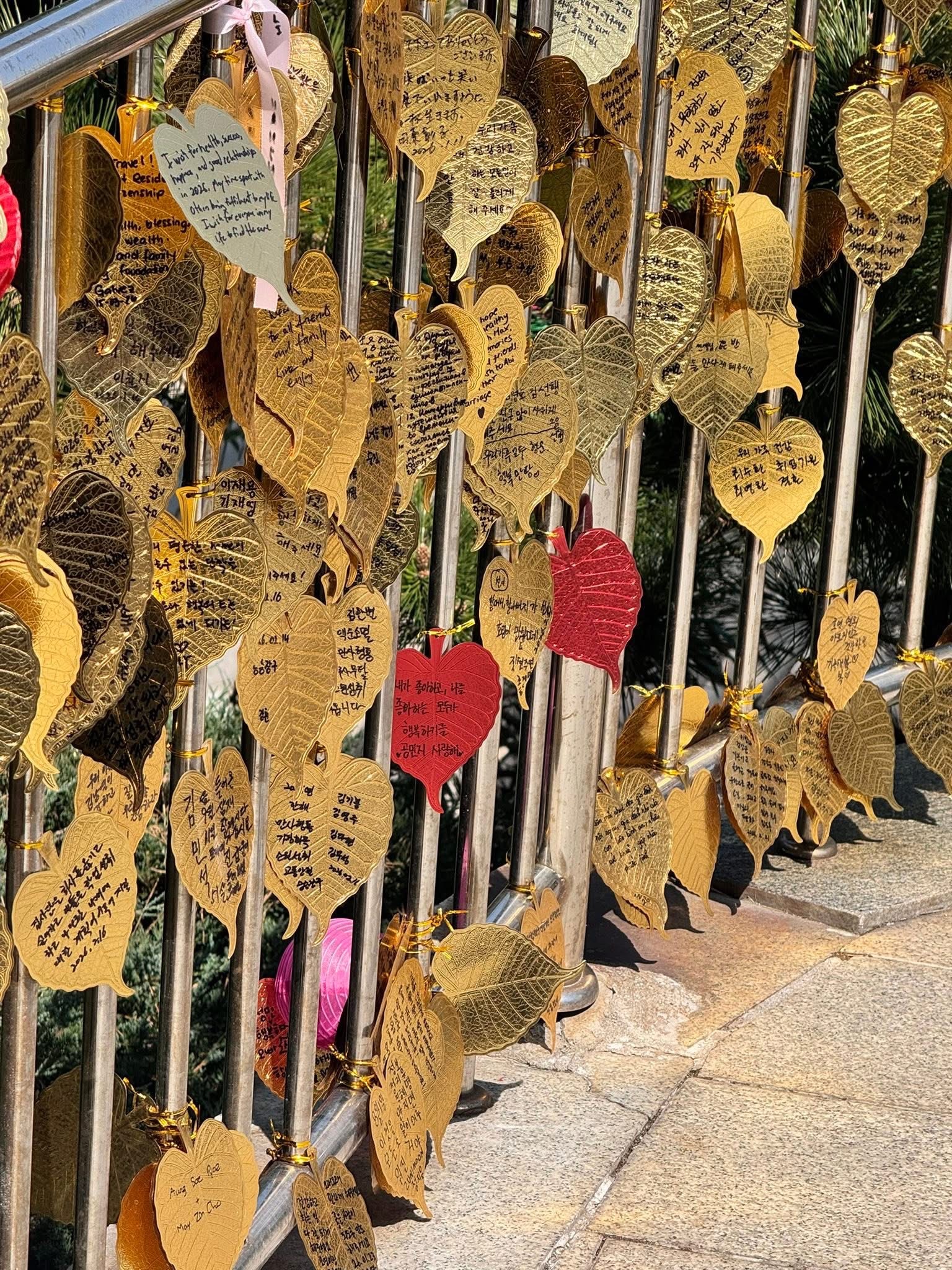
Korea has so much to offer—food, music, history, culture, technology, and, most importantly, its people. Every country has its own character, but I do not think it is easy to find another place quite like Korea. It is a highly developed country, yet many Koreans continue to value modesty, discipline, respect, and tradition.
This balance is one of the things I appreciate most about Korea. The country moves quickly, but it has not completely forgotten its past. Modern buildings stand beside traditional houses. Young people follow global trends, while older customs remain visible in everyday life. Even in a rapidly changing society, there is still a strong sense of order, consideration, and cultural identity.
Of course, no country is perfect. Korea also has its pressures, contradictions, and challenges. However, as a visitor, I often notice how carefully many everyday problems have been considered. Korea seems to have a practical solution for almost every situation. Sometimes these solutions are technologically advanced. At other times, they are surprisingly simple.
We experienced one of these simple but thoughtful solutions during our summer trip.
We visited Korea between the last week of July and the first week of August, which is one of the hottest and most humid periods of the year. As a Filipina, I thought I was already familiar with hot weather. The Philippines is tropical, after all. We live with sunshine, humidity, and high temperatures for most of the year.
But Korean summer felt different.
The sunlight seemed more direct, and the heat reflected from the roads and buildings. Walking even a short distance outside the shade felt exhausting. The sun was not merely hot—it felt angry. After only a few minutes, I began to feel as though heatstroke could arrive at any moment.
Our plan was to visit Jeonju Hanok Village, one of Korea’s most famous traditional neighborhoods. We traveled from Buan to Jeonju, excited to see the old houses, walk through the narrow streets, and experience the atmosphere of the historic town.
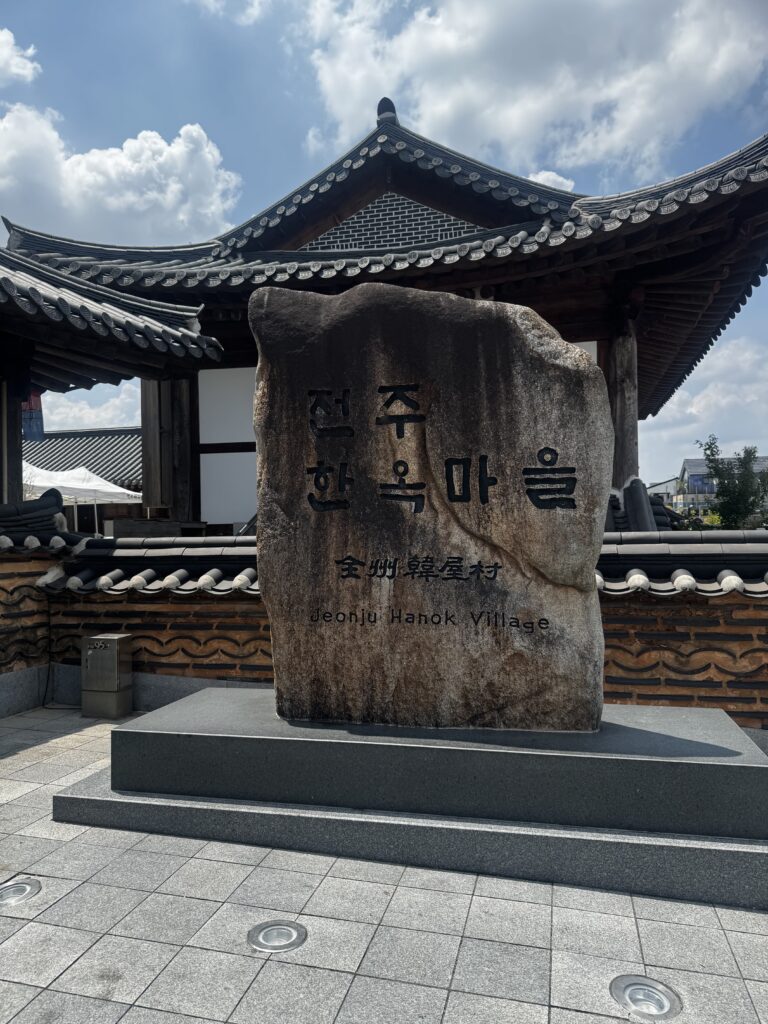
However, when we arrived and felt the intensity of the heat, our enthusiasm immediately became weaker. We seriously considered abandoning our sightseeing plans. Instead of exploring the village, we thought about spending the afternoon inside an air-conditioned coffee shop and later resting in a jjimjilbang.
It would have been comfortable, but it also felt disappointing. We had traveled all that way, and I did not want to leave without seeing even a small part of the town.
I asked my partner to walk with me for at least five or ten minutes.
“Let us walk just a little,” I said. “At least we can say that we have been here.”
I think many travelers will understand this feeling. Sometimes you have carefully planned a destination, imagined taking beautiful photographs, and looked forward to exploring it for weeks. Then reality arrives in the form of extreme heat, heavy rain, tired feet, delayed transportation, or simple exhaustion.
Travel does not always happen according to the perfect picture in our minds.
We stepped out of the shade and began walking. After about thirty meters, we saw something that immediately caught our attention: a small electric vehicle that looked similar to a golf cart. It was available for tourists to rent and drive around the village.
At that moment, it looked like the best invention in the world.
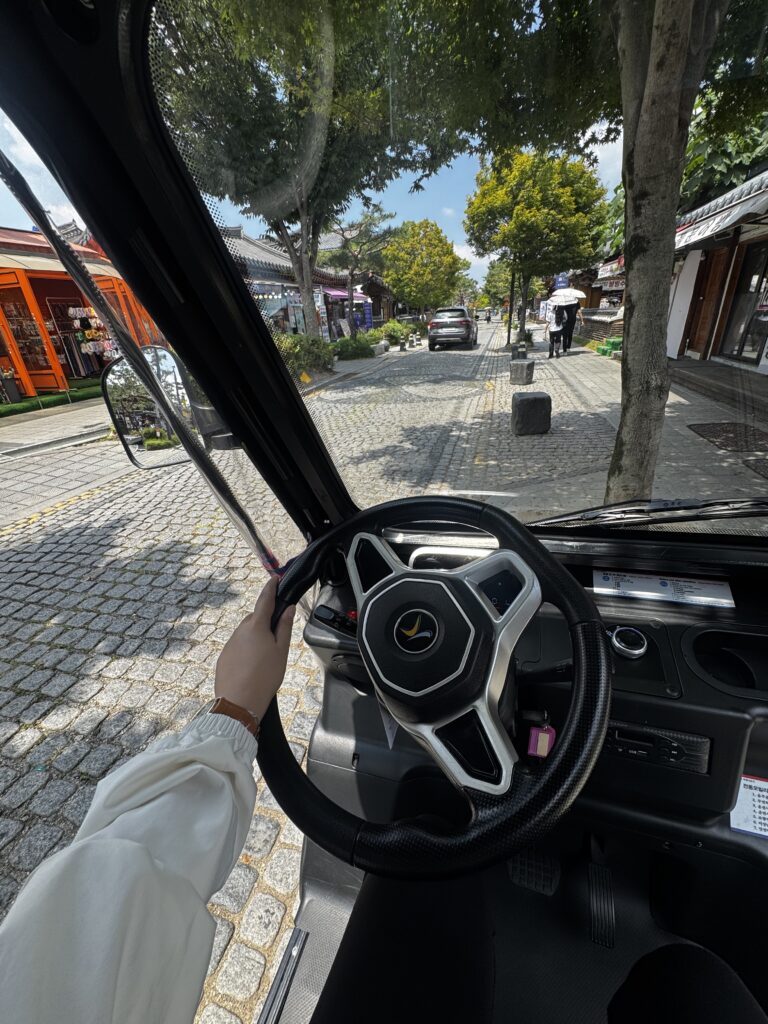
It was such a simple solution, but it completely changed our experience. Instead of forcing visitors to choose between suffering under the sun and missing the town entirely, the rental cart allowed people to explore the area with less physical strain.
We rented one for an hour for ₩30,000, or approximately US$21, depending on the exchange rate. During that hour, visitors can usually drive around the village two or three times, depending on their driving speed, confidence, and how often they stop.
Driving the cart became one of the most enjoyable moments of our trip. We were finally able to see the traditional hanok houses, streets, shops, and scenery without feeling that we were fighting against the weather every second.
We also saw other tourists using the same carts. Families, couples, and groups of friends were driving slowly through the village, enjoying the view and taking photographs. Everyone looked more relaxed. Instead of rushing from one shaded area to another, they could appreciate their surroundings.
Some people might see the cart as only a tourist convenience. For me, it represented something larger about Korea: the ability to observe a practical problem and create an organized solution.
The cart did not remove the summer heat. It did not change the weather. It simply made the experience more manageable.
I believe that is an important lesson, not only for tourism but also for life. We cannot always remove every difficulty, but we can often find a way to make it easier to carry.
As a foreigner, I appreciated the convenience. As a Filipina, I also found myself thinking about tourism in the Philippines. Our country has many beautiful heritage towns, beaches, mountains, and historical sites. However, accessibility and visitor comfort are sometimes treated as secondary concerns.
We often expect tourists to adjust completely to the environment. We tell them to tolerate the heat, walk farther, wait longer, or simply accept inconvenience as part of the adventure.
But thoughtful tourism does not mean changing the identity of a place. It means helping more people experience that place safely and comfortably. Elderly travelers, families with children, people with disabilities, and visitors who are not physically prepared for extreme weather should also be able to enjoy cultural destinations.
Perhaps this is one idea that the Philippines can learn from Korea: small improvements can have a major effect on a visitor’s experience.
At the same time, I hope Korean readers can appreciate how meaningful these small details can be to foreigners. Something that appears ordinary to a local person may become a memorable part of a visitor’s journey. A clear sign, a clean rest area, an accessible vehicle, a helpful employee, or a simple system can leave a lasting impression.
After exploring Jeonju Hanok Village, we continued our day in the best way possible: with Korean food.
We ate gamjatang, which, in my personal opinion, is one of the best dishes in Korea. I know that food preferences are subjective, but gamjatang has never disappointed me. Its rich and spicy broth, tender pork, potatoes, vegetables, and deep flavor make it especially comforting after a tiring day.
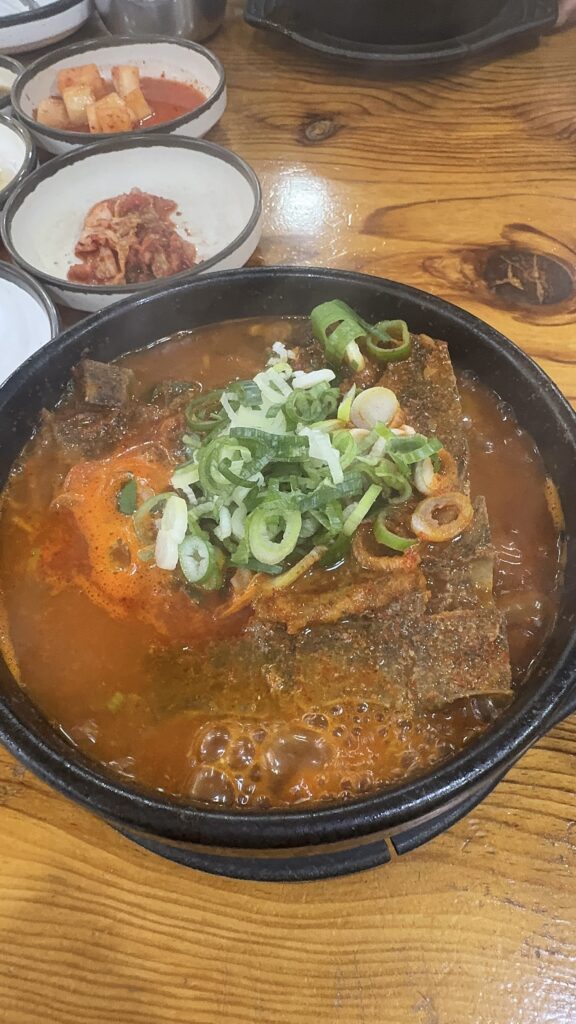
For me, Korean food is not only something to eat. It is part of the emotional experience of traveling. A bowl of hot soup after walking under the sun can become more memorable than an expensive restaurant meal. Food helps connect places with feelings, and gamjatang will always remind me of comfort after a long summer day.
After our meal, we went to a jjimjilbang to rest and sleep before continuing to Seoul for my late-night flight back to the Philippines.
There was something very Korean about the ending of that day: a traditional village, a practical electric cart, a deeply comforting meal, and a jjimjilbang where tired travelers could recover before continuing their journey.
It was not the day we had originally planned. We did not walk peacefully through cool streets under pleasant weather. We did not spend hours exploring every corner of the village. The heat forced us to change our expectations.
Yet the day became memorable precisely because things did not go perfectly.
Travel teaches us that enjoyment does not always depend on ideal conditions. Sometimes the most meaningful moments come from adapting, laughing at our discomfort, discovering an unexpected solution, and appreciating the small things that help us move forward.
When I returned to the Philippines, I did not only remember the famous tourist attractions. I remembered how Korea responded to an ordinary problem. I remembered the little cart that rescued us from the summer heat. I remembered the gamjatang, the jjimjilbang, and the quiet satisfaction of knowing that, despite the weather, we had still experienced Jeonju.
Korea is admired around the world for its entertainment, technology, beauty products, and economic development. But beyond these visible achievements, I believe one of its greatest strengths is its attention to everyday life.
It is a country that often asks: How can this be made more convenient? How can people move more efficiently? How can tradition remain accessible in a modern society?
The answers are not always grand. Sometimes, the answer is simply a small electric cart waiting near the entrance of an old town on an unbearably hot summer afternoon.
And sometimes, that small solution is enough to transform a difficult day into a beautiful memory.
Leave a Reply