
The Philippines offers many opportunities for small businesses, but opportunities need to be viewed realistically.
A good business idea is not simply about finding a product or service that appears to be in demand. The business must also match the location, available capital, skills, management capacity, government requirements, competition, and—most importantly—the people who will actually become customers.
In my opinion, one of the most important things anyone should understand before starting a business in the Philippines is the Filipino market itself.
Unless your business specifically targets foreigners, the majority of your customers will probably be Filipinos. Understanding what Filipino customers want, how much they are willing to pay, where they shop, what influences their buying decisions, and what makes them return is therefore just as important as the business idea itself.
For foreigners, there is another important consideration: Philippine laws and regulations governing foreign ownership, business registration, taxation, permits, immigration, and employment.
A business idea may be commercially attractive, but before investing money, a foreign entrepreneur should first determine whether the proposed business structure and activity are legally allowed.
Starting Business in the Philippines at a Glance
- Main opportunity: A large and diverse consumer market with demand for food, services, online products, tourism, manufacturing, agriculture, and other businesses
- Most important market lesson: Understand your specific Filipino customer before making a large investment
- For foreigners: Check foreign-ownership restrictions before investing
- Registration: The appropriate agency depends on the business structure
- Taxes: Businesses generally need to register with the Bureau of Internal Revenue
- Local permits: City or municipal business permits and other approvals may be required
- Working in the business: Foreign ownership does not automatically provide permission to work in the Philippines
- Best advice: Start small, test demand, understand the rules, calculate the real numbers, and expand only after the business model has proven itself
Table of Contents
Retirees considering entrepreneurship may also find our guide to 10 Best Businesses Expats and Retirees Can Start in the Philippines useful.
Understand Filipino Customers First
Knowing the Philippines geographically is not the same as understanding the Philippine market.
A business idea that succeeds in Korea, Japan, the United States, Europe, or another country will not automatically succeed in the Philippines.
The product may need a different price.
The portion may need to be different.
The packaging may need to change.
Customers may use different payment methods.
They may discover businesses through different social-media channels.
Their expectations about service, promotions, convenience, delivery, and value may also be different.
This is why I believe understanding Filipino consumers should come before making a major investment.
Questions worth asking include:
- Who exactly is the target customer?
- What is their income level?
- How much are they willing to spend?
- Are they highly price-sensitive?
- Do they prioritize price, quality, convenience, or brand?
- How important are discounts and promotions?
- Do they prefer buying online or in person?
- What influences their purchasing decisions?
- What makes them return?
- What causes them to recommend a business to friends or family?
There is no single Filipino consumer.
Customers in BGC may behave differently from customers in Quezon City, Cebu, Pampanga, Iloilo, or a smaller provincial town.
Age, income, occupation, family situation, location, and lifestyle can significantly affect consumer behavior.
Therefore, understanding the specific Filipino customer your business wants to serve is more useful than simply saying that the Philippine market is large.
Food and Beverage Businesses
Food and beverage businesses are naturally among the first opportunities many entrepreneurs consider.
Filipinos enjoy eating out, ordering food for delivery, visiting cafés, and trying new food concepts. Korean food, coffee, snacks, desserts, and simple meal businesses can attract customers when the concept, pricing, and location are right.
But a busy restaurant is not necessarily a profitable restaurant.
Food businesses require careful management of:
- food costs;
- rent;
- salaries;
- electricity and water;
- wastage;
- hygiene;
- supplier reliability;
- inventory;
- portion size;
- delivery commissions;
- and consistent taste.
Understanding Filipino customers is particularly important in food businesses.
A menu that works in Korea may not necessarily work without modification in the Philippines.
Taste, sweetness, spice level, portion size, presentation, pricing, and menu combinations may all need adjustment.
If Filipino customers are the main target, the business ultimately needs to serve their preferences rather than the owner’s assumptions.
Online Selling and E-Commerce
Online selling has made it possible to test a business with much less capital than opening a traditional physical store.
Products such as:
- Korean products;
- cosmetics;
- household goods;
- clothing;
- tools;
- travel accessories;
- specialty food;
- electronics accessories;
- and lifestyle products
can be sold through e-commerce platforms and social media.
The advantage is that an entrepreneur can begin relatively small and test demand.
However, competition is extremely strong.
A product may generate good sales but very little profit after considering:
- sourcing;
- shipping;
- platform fees;
- advertising;
- discounts;
- returns;
- packaging;
- delivery;
- and price competition.
For this reason, online selling demonstrates an important business principle:
Sales and profit are not the same thing.
Before importing or purchasing a large quantity of products, test the market with a smaller quantity first.
Tourism-Related Businesses
Tourism can also create business opportunities in the Philippines.
Possible services include:
- itinerary planning;
- local tours;
- transportation coordination;
- airport assistance;
- accommodation assistance;
- retirement tours;
- restaurant guides;
- destination guides;
- and language support for foreign visitors.
For someone who understands both the Philippines and a particular foreign market, this can provide an advantage.
For example, Korean-language travel or retirement services may help Korean visitors who are unfamiliar with Philippine transportation, accommodation, government procedures, local customs, or everyday communication.
However, tourism businesses also have risks.
Demand can change because of:
- seasonality;
- weather;
- typhoons;
- exchange rates;
- airline capacity;
- economic conditions;
- political conditions;
- and changing visitor numbers from individual countries.
A business that depends almost entirely on one nationality therefore carries additional risk.
If visitor numbers from that country decline, the business can immediately feel the effect.
Diversifying the customer base may therefore be important.
Small Manufacturing and Customized Products
Small-scale manufacturing is another business area worth exploring.
Modern equipment such as:
- laser cutters;
- CNC machines;
- woodworking equipment;
- printing equipment;
- engraving machines;
- and other small production technologies
can make it possible to produce customized products locally.
Possible products include:
- personalized gifts;
- signs;
- decorations;
- corporate giveaways;
- event products;
- furniture;
- promotional items;
- and home accessories.
Customized products can sometimes produce better margins than simply reselling ordinary mass-produced goods because customers are paying for personalization, design, and convenience.
But buying a machine does not automatically create a business.
Manufacturing introduces additional challenges such as:
- equipment investment;
- maintenance;
- skilled labor;
- production time;
- quality control;
- material sourcing;
- design;
- marketing;
- and delivery.
The real business begins when you find customers who are willing to pay enough for what the machine produces.
Agriculture and Aquaculture
The Philippines has significant agricultural and marine resources, which can make agriculture and aquaculture attractive to investors.
Potential activities include:
- vegetables;
- fruit;
- fish;
- shrimp;
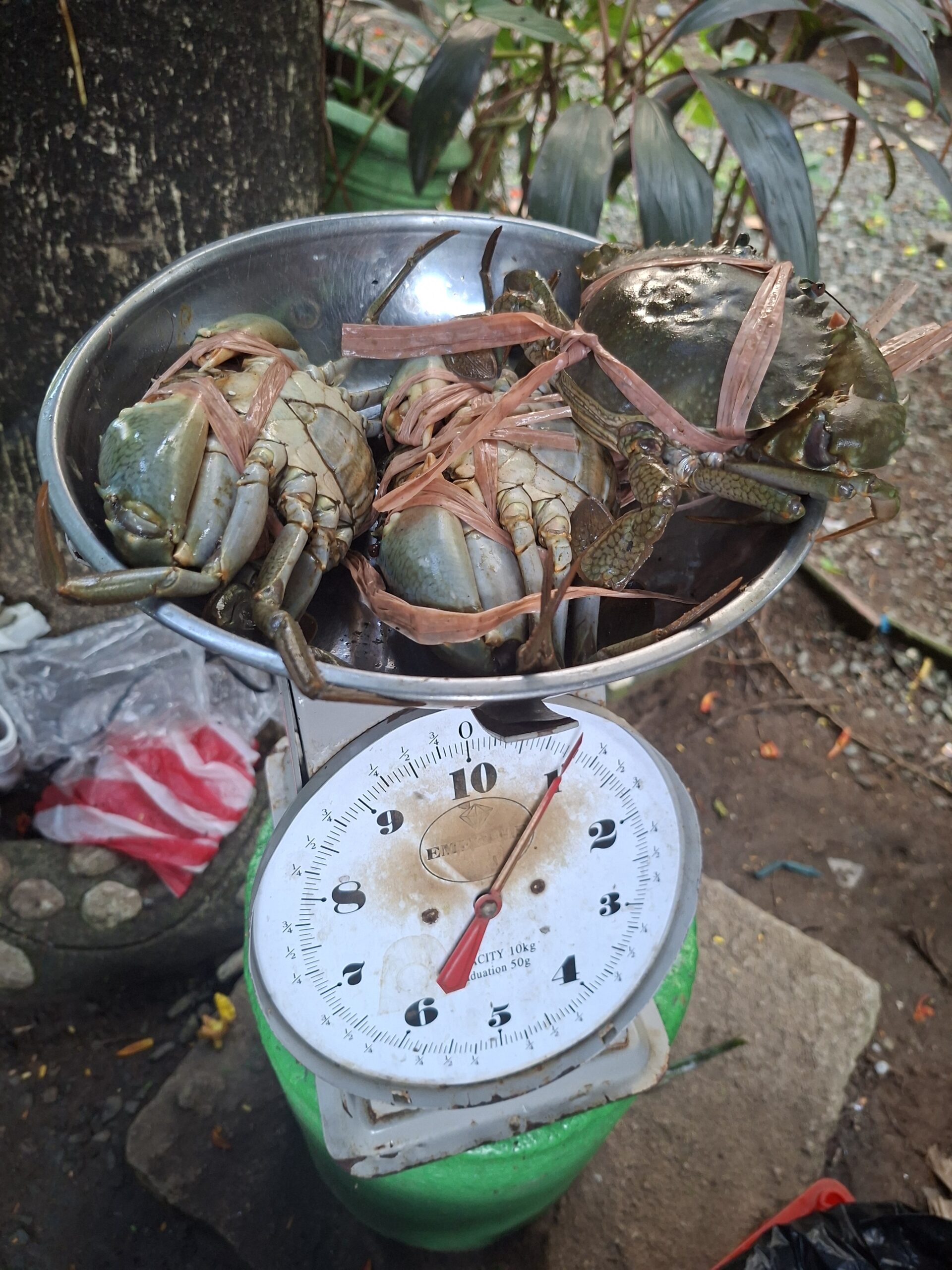
- mud crab;
- livestock;
- food processing;
- and other agricultural products.
High market prices can sometimes make these businesses appear extremely profitable from the outside.
But agriculture and aquaculture can be technically demanding.
Operators may need to manage:
- disease;
- mortality;
- weather;
- water quality;
- feed costs;
- production cycles;
- transportation;
- storage;
- fluctuating market prices;
- permits;
- and reliable buyers.
Someone should not enter an agricultural or aquaculture business simply because the selling price of the final product looks attractive.
Technical knowledge, operational discipline, and reliable marketing channels are often much more important than the headline selling price.
Start Small Before Investing Big
Before committing a large amount of money, I believe one of the safest approaches is to test the business on a small scale.
Do not immediately open a large restaurant.
Do not immediately import a container of products.
Do not immediately buy expensive machines.
Do not immediately rent a large commercial space.
First find out whether real customers actually want what you plan to sell.
Sell a small quantity.
Talk to customers.
Observe what they choose.
Ask why they buy.
Ask why they do not buy.
Test different prices.
Calculate the real costs.
Study competitors.
Observe which products customers repeatedly purchase.
This testing period provides something that market reports alone cannot fully provide:
direct knowledge of Filipino customers.
It is much cheaper to discover that an idea does not work during a small test than after investing millions of pesos.
A Simple Business Checklist
Before starting a business, ask yourself:
- What problem does this business solve?
- Who exactly is the target customer?
- Why would customers choose my business instead of a competitor?
- How much are customers realistically willing to pay?
- What is the true cost of the product or service?
- What is the expected profit margin?
- How will customers discover the business?
- How much will marketing cost?
- What permits and registrations are required?
- Who will manage daily operations?
- How will employees be recruited and managed?
- Can the business survive slow months?
- How will accounting and taxes be handled?
- How much capital can I afford to lose during the testing period?
If these questions cannot yet be answered, the business probably needs more research before receiving a large investment.
Starting a Business in the Philippines as a Foreigner: Ownership Rules
For a foreign entrepreneur, one of the first regulatory questions should be:
Can a foreigner legally own this type of business, and if so, how much foreign ownership is allowed?
The Philippines allows foreign investment in many activities, and in businesses not restricted by the Foreign Investments Negative List or other laws, foreign investors may be able to own up to 100% of the enterprise. However, certain activities remain subject to foreign-equity limitations or nationality restrictions.
This means foreigners should not assume that the same ownership rule applies to every type of business.
The rules can depend on factors such as:
- the industry;
- the nature of the activity;
- whether the company primarily serves the domestic market;
- applicable capitalization requirements;
- and specific laws governing the sector.
Before transferring substantial capital, check the current rules with the Philippine Board of Investments (BOI), the Securities and Exchange Commission (SEC), or a qualified Philippine lawyer or accountant. The BOI publishes official guidance for foreign investors and a current Doing Business in the Philippines guide.
Foreign investors should also be very careful about informal arrangements where a Filipino person is placed on paper as the owner simply to avoid a foreign-ownership restriction.
The legal ownership structure should reflect the actual investment arrangement and comply with Philippine law.
Choosing the Right Business Structure
The registration process depends on the type of business structure.
Corporation or Partnership
Corporations and partnerships are generally registered with the Securities and Exchange Commission.
The SEC operates the eSPARC online system for company-registration applications, including domestic and foreign-owned corporations, partnerships, and foreign corporations seeking authority to operate in the Philippines.
For many foreign investors, a corporation may be the more practical structure, but the appropriate choice depends on ownership, taxation, liability, capitalization, and the nature of the proposed business.
Sole Proprietorship
A sole proprietorship generally involves business-name registration through the Department of Trade and Industry (DTI).
The DTI states that foreign nationals who are legally authorized to do business in the Philippines may register a business name, although non-Philippine nationals are subject to additional requirements.
For foreigners, the easiest-looking business structure is not necessarily the most appropriate one.
Professional advice may be worthwhile before choosing the structure, particularly when a substantial investment is involved.
Business Registration Does Not End With SEC or DTI
Registering a company with the SEC or registering a business name with the DTI does not mean the business is automatically ready to begin operations.
A business may also need registration with the Bureau of Internal Revenue (BIR) and permits from the city or municipality where it operates.
The BIR provides online services for new business registration, including the NewBizReg portal and other registration systems.
Depending on the location and type of operation, a business may also need local permits and clearances.
Local government units increasingly use Business One-Stop Shops or electronic BOSS systems to streamline business-permit applications, although procedures can still vary by locality.
Depending on the activity, additional permits may also be required from agencies responsible for areas such as:
- food and health;
- environment;
- construction;
- tourism;
- imports;
- agriculture;
- manufacturing;
- professional services;
- or other regulated sectors.
A restaurant, for example, will not necessarily have the same permit requirements as a consulting company, online seller, manufacturing operation, travel business, or aquaculture project.
This is why the regulatory checklist should be prepared before renting premises or purchasing major equipment.
Taxes and Accounting Should Be Planned From the Beginning
Tax should not be treated as something to worry about only after the business becomes profitable.
A new business should understand its BIR registration, invoicing, bookkeeping, filing, and tax obligations from the beginning. The BIR maintains official registration services and requirements for both individual and non-individual business registrants.
For a small operation, the owner may be able to manage some administrative tasks personally.
As the business becomes larger or more complicated, however, using a qualified accountant or tax professional can prevent expensive mistakes.
When evaluating a business idea, always calculate profits after taxes and compliance costs, not before them.
Owning a Business and Working in It Are Different Questions
This is another issue foreign investors should understand clearly.
Owning or investing in a Philippine business does not automatically give a foreign national unrestricted authority to work in the Philippines.
Foreign nationals engaging in employment may be subject to separate employment and immigration requirements.
The Department of Labor and Employment administers Alien Employment Permit rules for foreign nationals working in the Philippines, while the Bureau of Immigration maintains visa categories including the 9(g) Pre-arranged Employment Visa and other visas that may apply depending on the circumstances.
The Bureau of Immigration also lists other visa categories relevant to certain investors and businesspeople, but eligibility depends on the individual’s circumstances.
Therefore, a foreign investor who intends to actively manage, work for, or receive compensation from the business should check employment and immigration requirements separately from company ownership.
Do not assume that company registration alone gives you the right to work.
Consider BOI Registration for Qualifying Investments
Some projects may also qualify for registration with the Philippine Board of Investments (BOI).
BOI registration can be relevant to qualifying investments in priority or strategic activities, particularly larger projects involving sectors such as manufacturing, technology, infrastructure, exports, or other government-priority activities.
The BOI also provides information and investor-assistance services for companies establishing operations in the Philippines.
For a very small restaurant, online seller, or neighborhood service business, investment incentives may not be the main consideration.
For a larger project, however, it is worth checking potential incentives before the investment structure is finalized.
A Regulatory Checklist for Foreign Entrepreneurs
Before putting substantial money into a Philippine business, I would ask:
- Is the proposed activity open to foreign investment?
- Can foreigners own 100% of the business?
- Is foreign ownership restricted in this particular industry?
- Are there minimum-capital requirements applicable to the business?
- Should the business be structured as a corporation, partnership, or sole proprietorship?
- Should registration be made through the SEC or DTI?
- What BIR registrations are required?
- What city or municipal permits are required?
- Are barangay or other local clearances needed?
- Does the particular industry require additional government licences?
- Can I personally work in and manage the business under my immigration status?
- Do I need an Alien Employment Permit or another employment authorization?
- What visa is appropriate for my situation?
- Does the proposed project qualify for BOI registration or investment incentives?
- What taxes will the business pay?
- Do I need a Philippine lawyer or accountant before making the investment?
These questions should ideally be answered before signing a long-term lease, purchasing machinery, importing inventory, transferring substantial capital, or appointing business partners.
Do Not Choose a Filipino Partner Only Because You Need One
Foreign entrepreneurs sometimes begin with the idea that they simply need a Filipino partner to start a business.
That is the wrong way to choose a partner.
A good business partner should contribute something meaningful, such as:
- industry knowledge;
- customer relationships;
- operational capability;
- local market experience;
- technical expertise;
- capital;
- or management ability.
Trust is also critical.
Business partnerships can become difficult even when everyone begins with good intentions.
Ownership, responsibilities, salaries, profit distribution, decision-making authority, future investment requirements, exit conditions, and dispute procedures should be clearly understood from the beginning.
The partner should be selected because they make the business stronger—not simply because the entrepreneur believes a Filipino name is required on documents.
Opportunity Is Only the Beginning
The Philippines has business opportunities.
Its large population, expanding urban centers, digital economy, tourism industry, consumer market, agricultural resources, and workforce can create possibilities for entrepreneurs.
But opportunity alone does not create a successful business.
Execution matters.
Location matters.
Capital matters.
Management matters.
Government regulation matters.
And above all, understanding customers matters.
A business that looks excellent on a spreadsheet can fail because customers do not want it.
A very simple business can succeed because the owner understands exactly what customers need and operates it consistently.
For a foreigner planning a business in the Philippines, I would summarize the approach this way:
Understand the market. Understand Filipino customers. Understand the rules. Start small. Test your assumptions. Know your real numbers. Then expand when the business proves that it works.
PhilifeGuide will continue exploring business opportunities in the Philippines through practical experience, research, local market conditions, and realistic assessments of both opportunities and risks.
Foreign entrepreneurs planning to stay in the country long term may also want to read our guide to Living in the Philippines as a Foreigner.
Disclaimer: Philippine laws, foreign-ownership restrictions, capitalization requirements, tax rules, permit requirements, employment regulations, and immigration procedures may change and may differ depending on the business activity and individual circumstances. Always verify current requirements with the relevant Philippine government agency and seek qualified legal, accounting, tax, or immigration advice before making a substantial investment.
Leave a Reply